

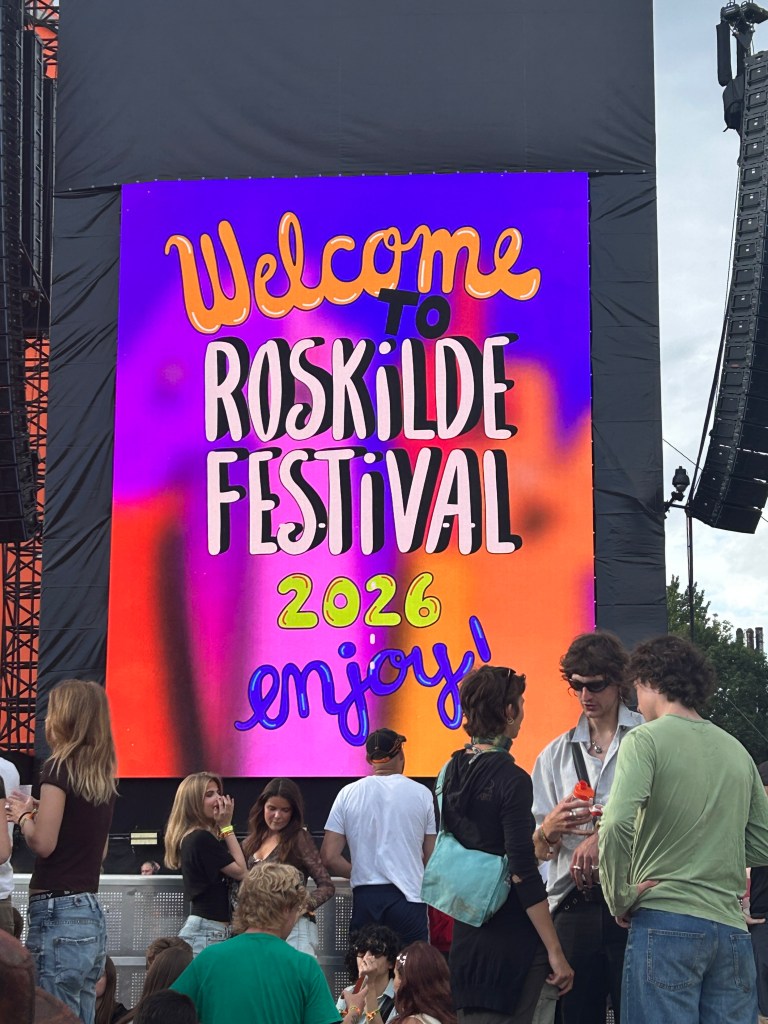
When I prepped for the Roskilde Festival at the end of June this year, everything I knew about Northern Europe’s largest music event was pure theory.
Now that I’ve been there, done that and got the metaphorical T-shirt, I can confidently say that all the good things you’ve heard about that legendary place are not even close to describing its unique character. From the line-up to the on-site press centre, it’s an experience like no other. And the four acts that waved the Australian flag at the Roskilde Festival in 2026 were also the very definition of its progressive, independent concept, favouring artists who stand out in the current global music landscape.
So here’s what went down and how the Aussie reps fared compared to the rest of the festival’s bill.
PART 271 OF “AM I EVER GONNA SEE YOUR FACE AGAIN?” A RANDOM COLLECTION OF UNKNOWINGLY OBVIOUS FACTS ABOUT THE AUSTRALIAN MUSIC SCENE
Roskilde Festival prides itself on being an independent, non-profit institution. But it’s also a community and a movement, created to make a difference. Its aim is to contribute to building a foundation for a brighter, more sustainable future by sparking hope and inspiring action for new generations.
This ambition sets the framework for the development of all parts of the event. Whether it’s scheduling its activities, designing the festival city, finding new green solutions or making it accessible to as many people as possible, the organisers strive to provide a safe space for progressive voices, ideas, and initiatives that inspire, challenge, bridge gaps and unite. Engaging 27,000 volunteers to build the site and nurture the event’s atmosphere is also a part of this community-focused concept.
Additionally, all proceeds generated during the 8-day event are donated to humanitarian, non-profit and cultural work, especially benefiting children and young people. Over the years, Roskilde Festival has generated approximately DKK 476 million (Danish Krone – the local currency) for charitable distribution.

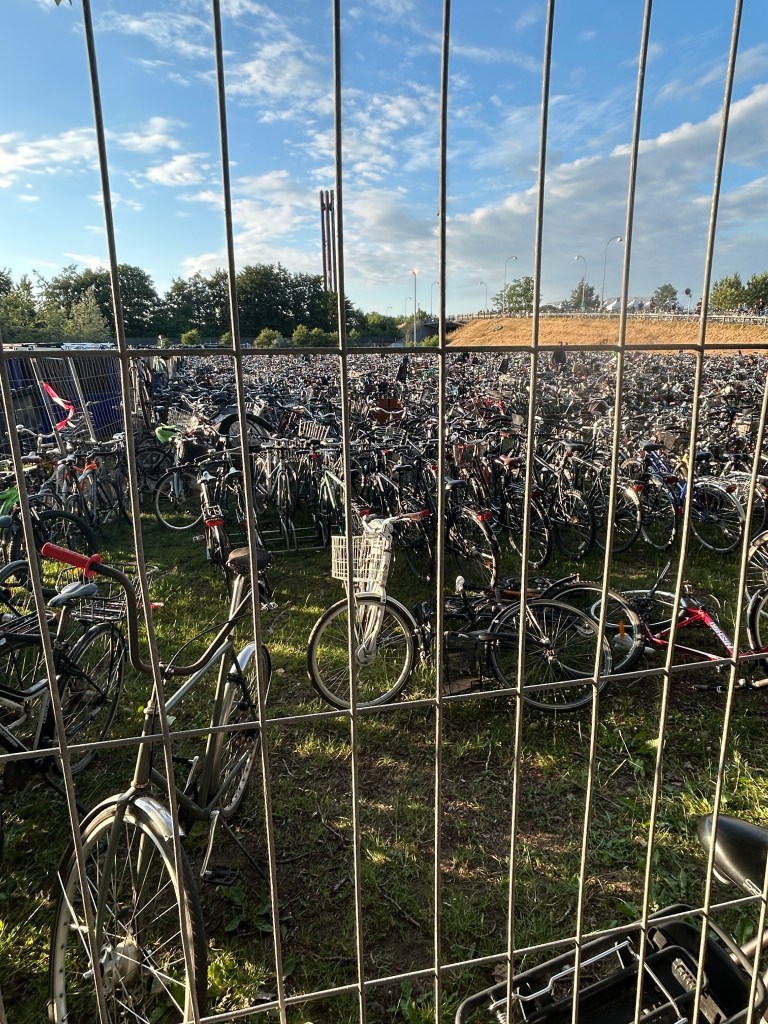


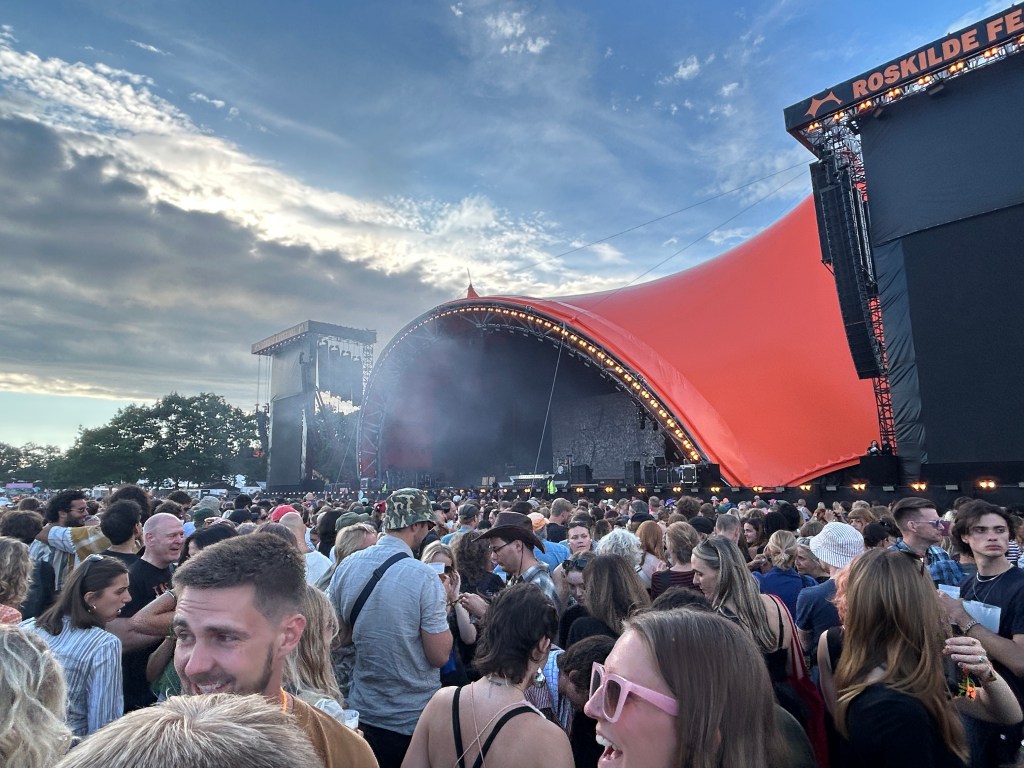
But how is that independent, progressive approach reflected in practice?
This year, almost 180 music acts and more than 90 art and activism projects, including installations, performances, talks and activities, from over 30 countries, were programmed for the 16 stages and experience spaces. In the words of the festival’s CEO Signe Lopdrup: “Roskilde Festival has a special opportunity to bring people together across generations, perspectives and backgrounds. This year showed how strong that community is, and how willing our participants are to engage, take part and try new ways of doing things.“
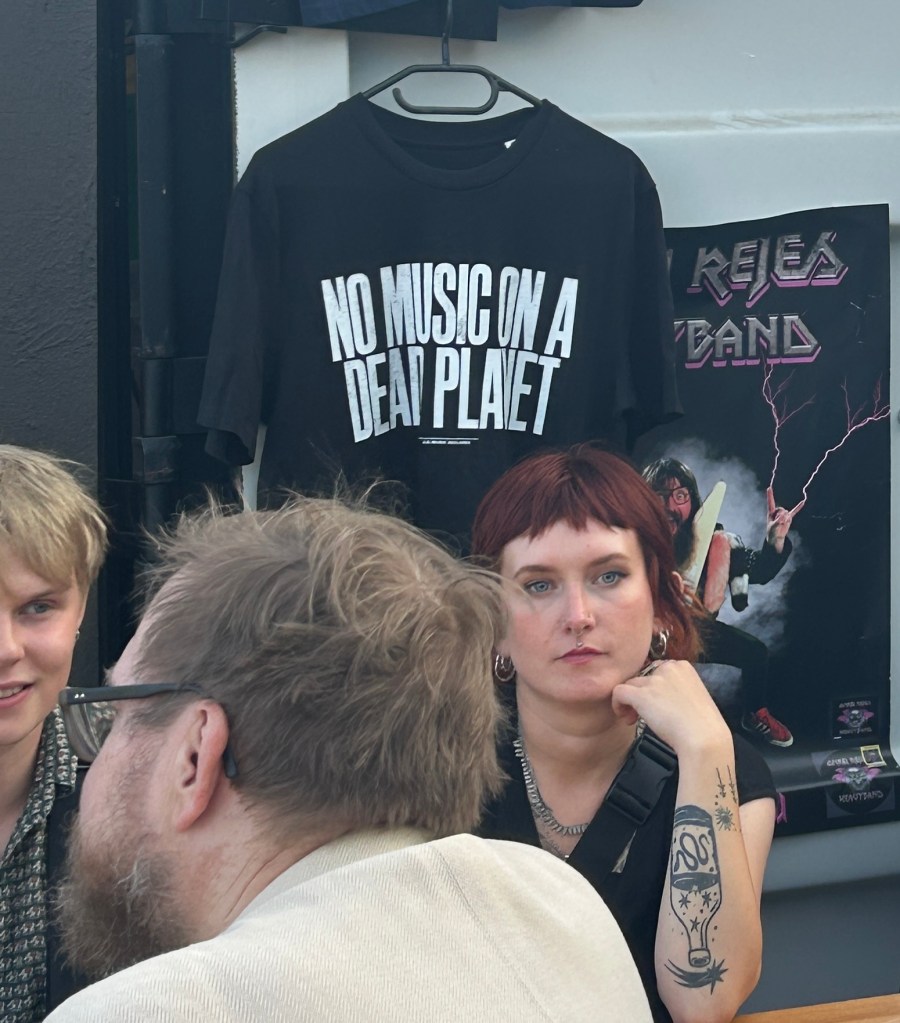
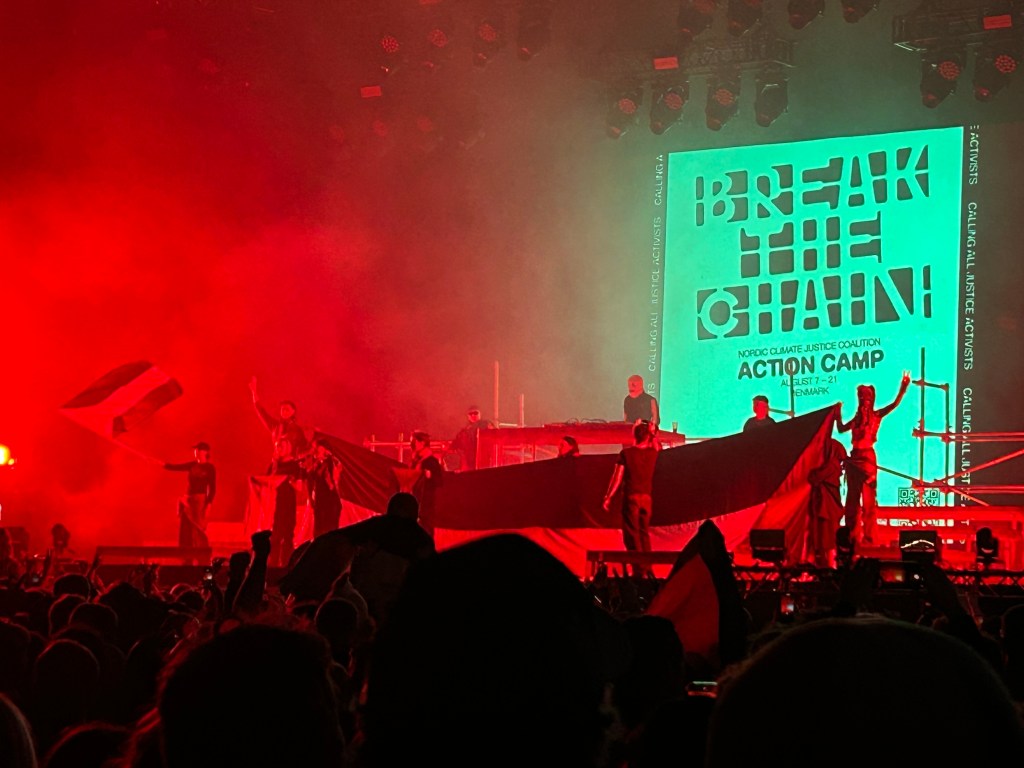
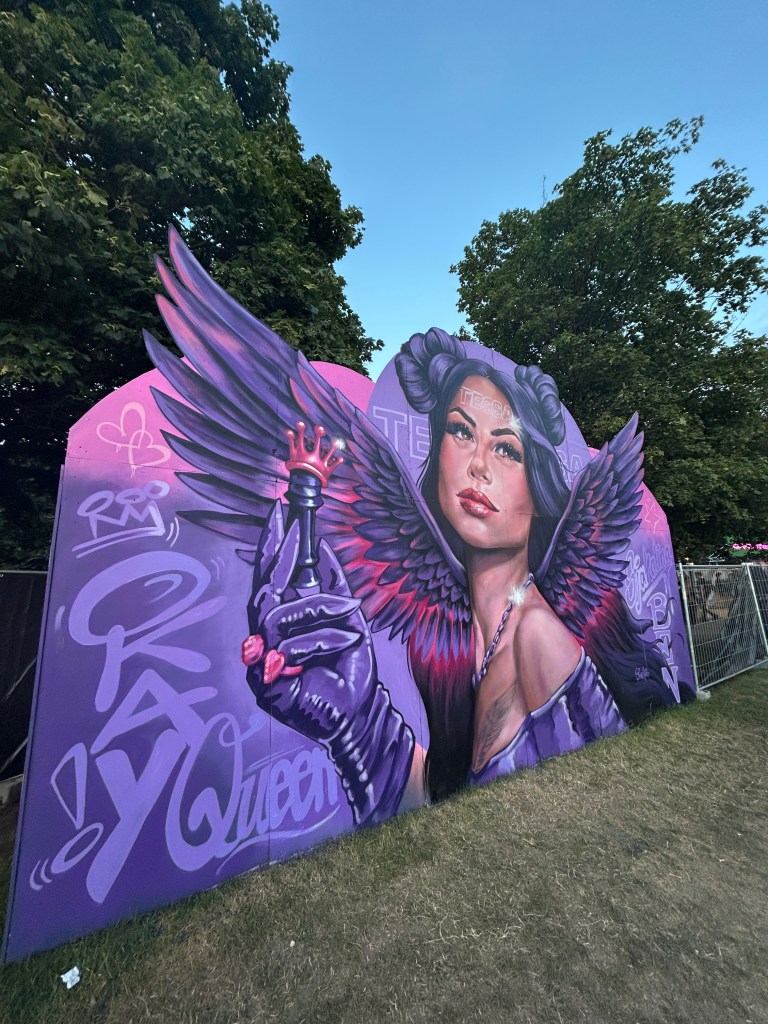
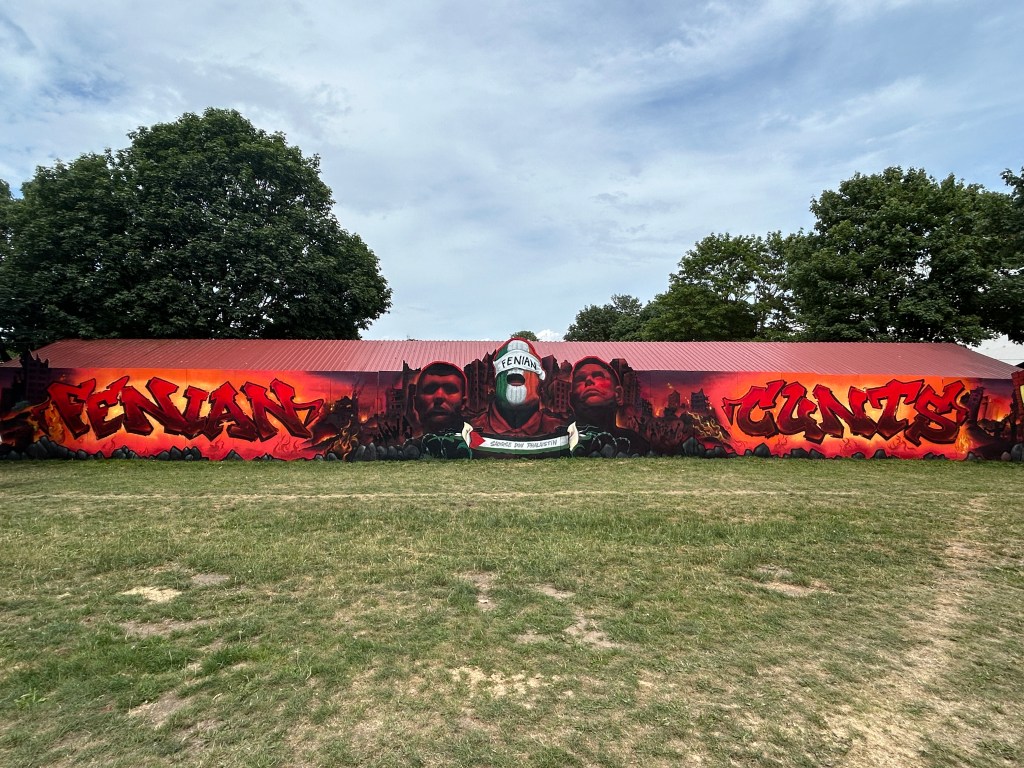
Wondering through the festival site for a few days, I can confirm that statement. Festival goers were keen to engage with all the different forms of expression. For instance, a mural dedicated to the West Belfast rap outfit Kneecap was a particularly popular photo op (and the musos themselves engaged with it on the day they played their set). The Nordic Climate Justice Coalition were busy educating punters on site about their campaigns, receiving an enthusiastic response. And I spotted the ‘No Music On a Dead Planet’ T-shirt in a merch shop as well.
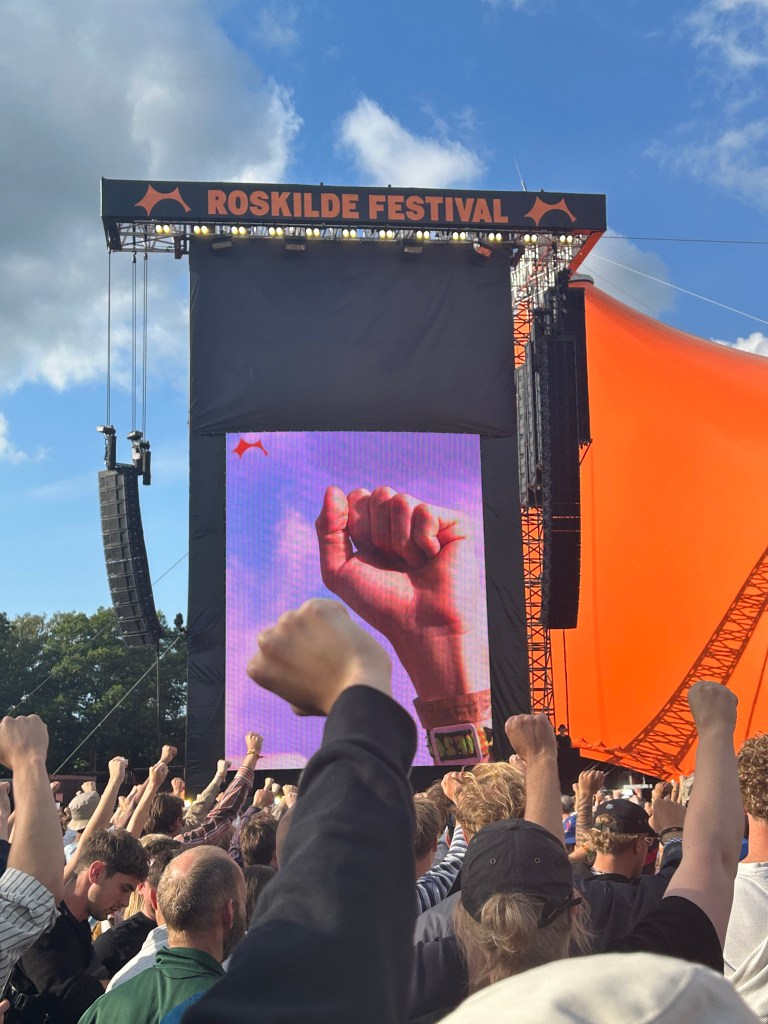
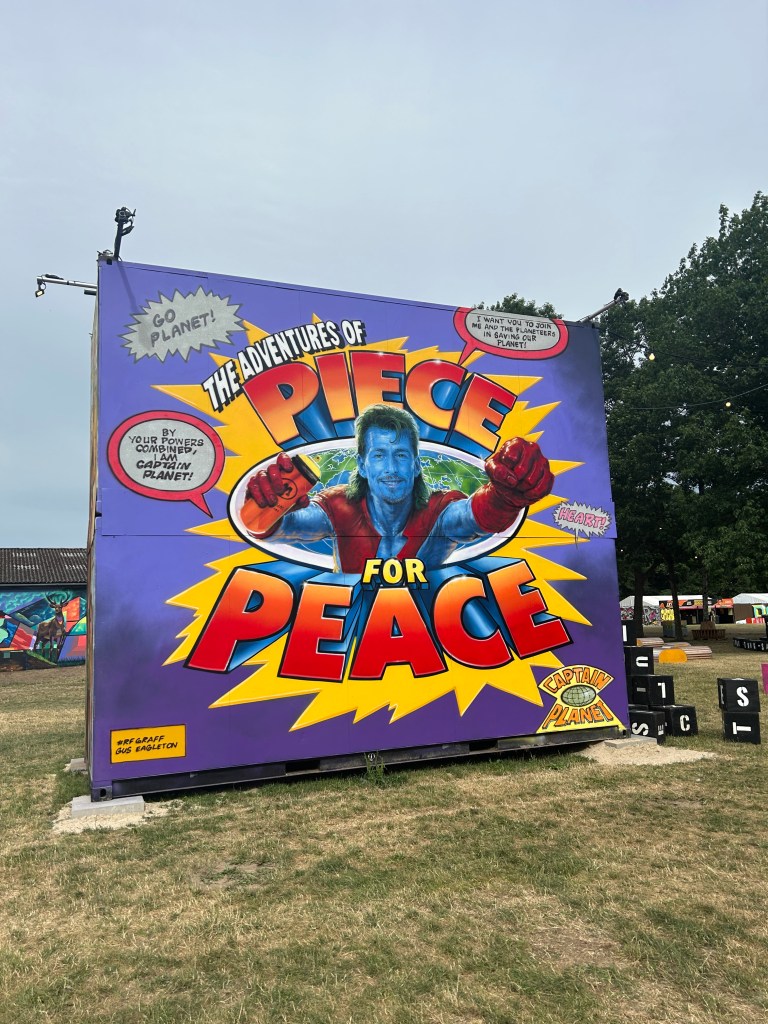
But Roskilde Festival is a music gathering first and foremost. So the acts (and the genres they represent) booked for a specific year play a major role in shaping its character.
When I spoke to the festival’s Head of Music, Thomas Sønderby Jepsen, in the lead-up to the event, he stressed that the booking team always focuses on the acts’ relevance in the current music landscape, prioritising the live experience they provide for music fans. But I have the impression that this year, the event’s bill was particularly diverse.
Beloved legends, like Talking Heads’ David Byrne, The Cure and Gorillaz, headlined the main stages. The line-up also featured several artists stirring things up in the music world right now, like K-pop star Jennie, enigmatic British grime rapper EsDeekid and American hyperpop/EDM duo Frost Children. It also shone a light on a plethora of emerging talent from other, more remote parts of the world.
In 2026, Royel Otis, Ecca Vandal, Folk Bitch Trio and Genesis Owusu were tapped to rep the Antipodes. And they clearly showed Denmark how Aussies do it back home.
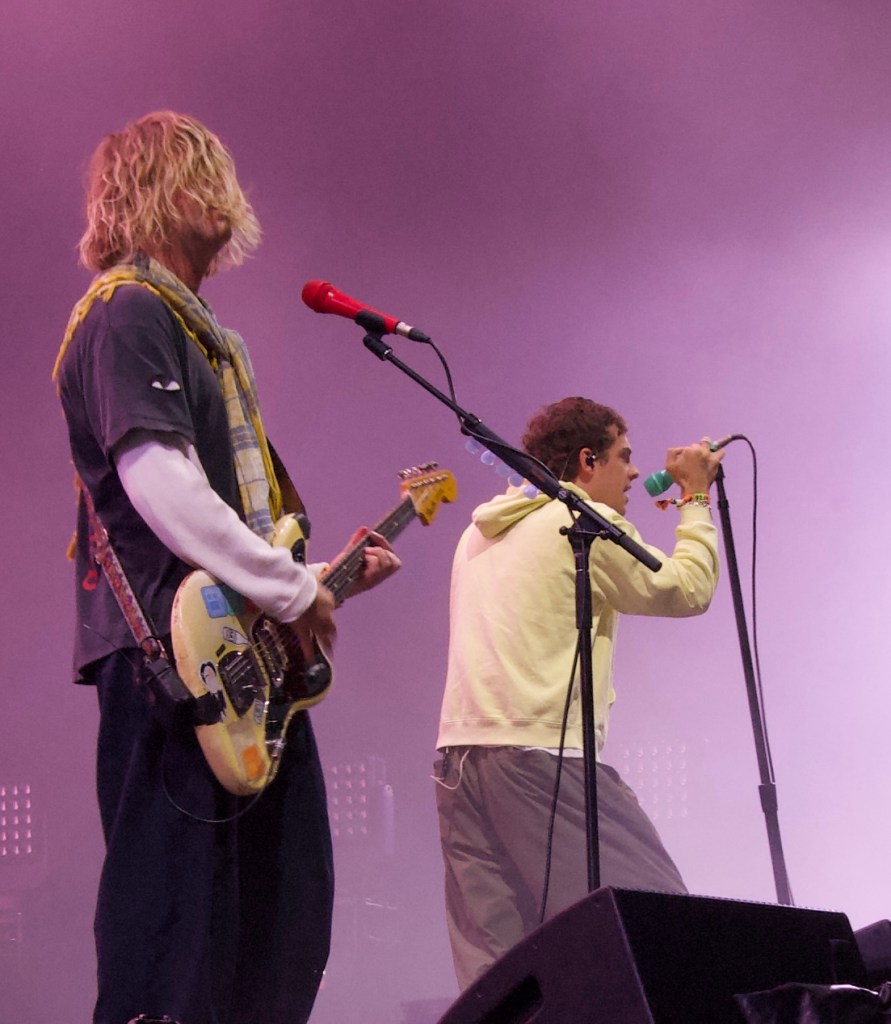
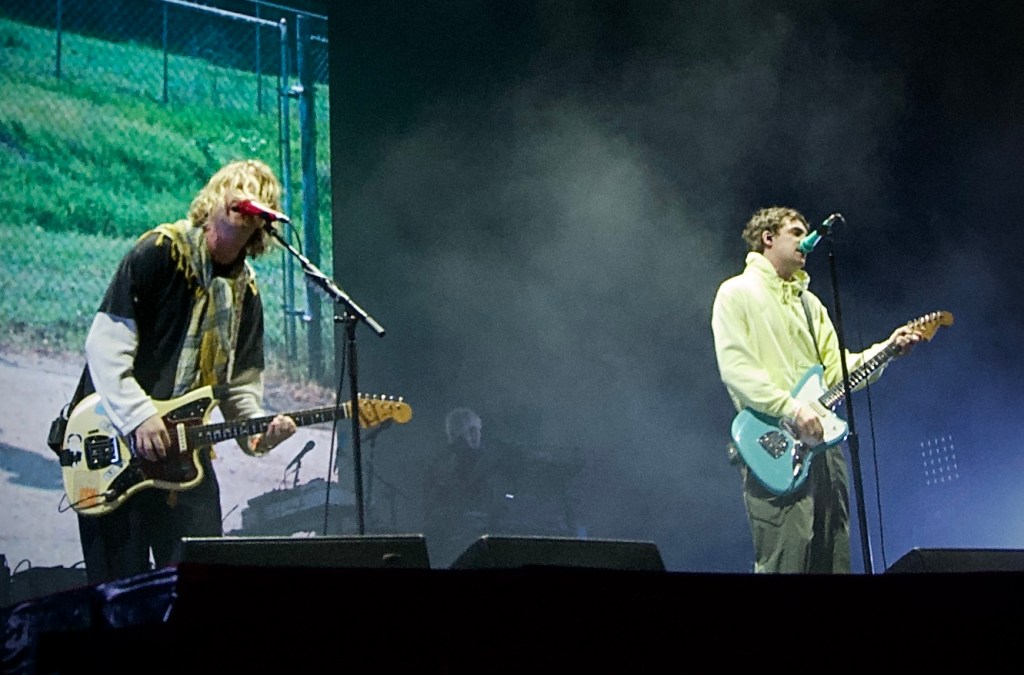
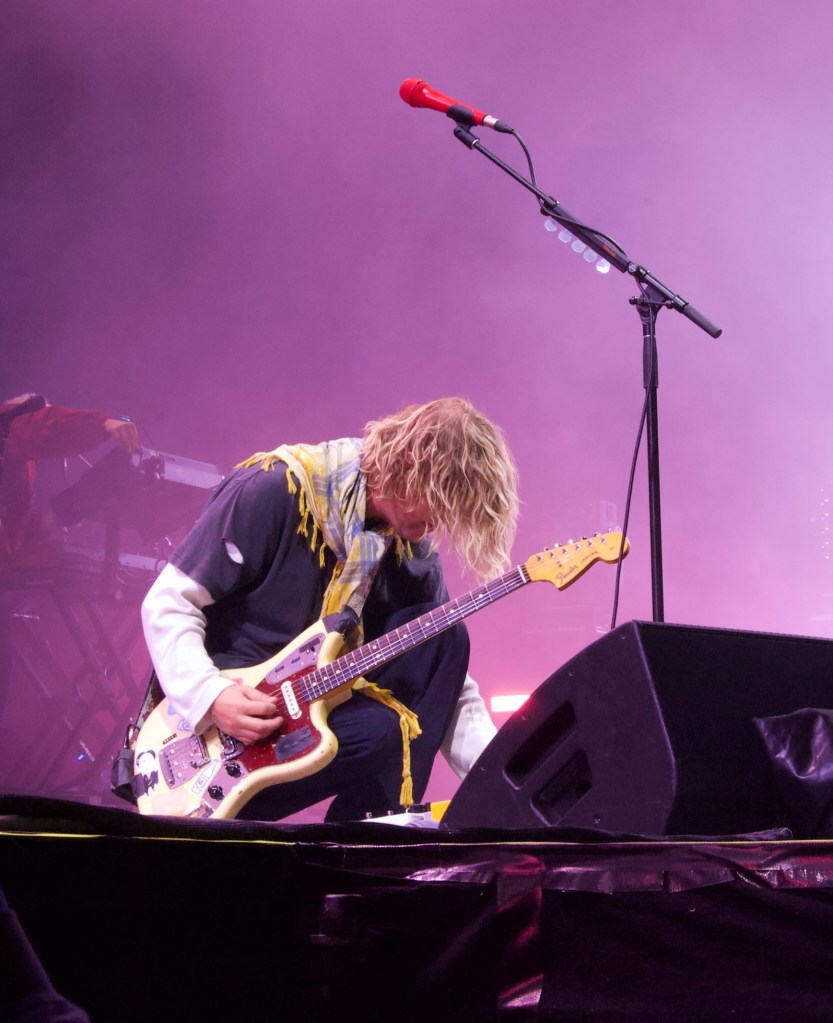
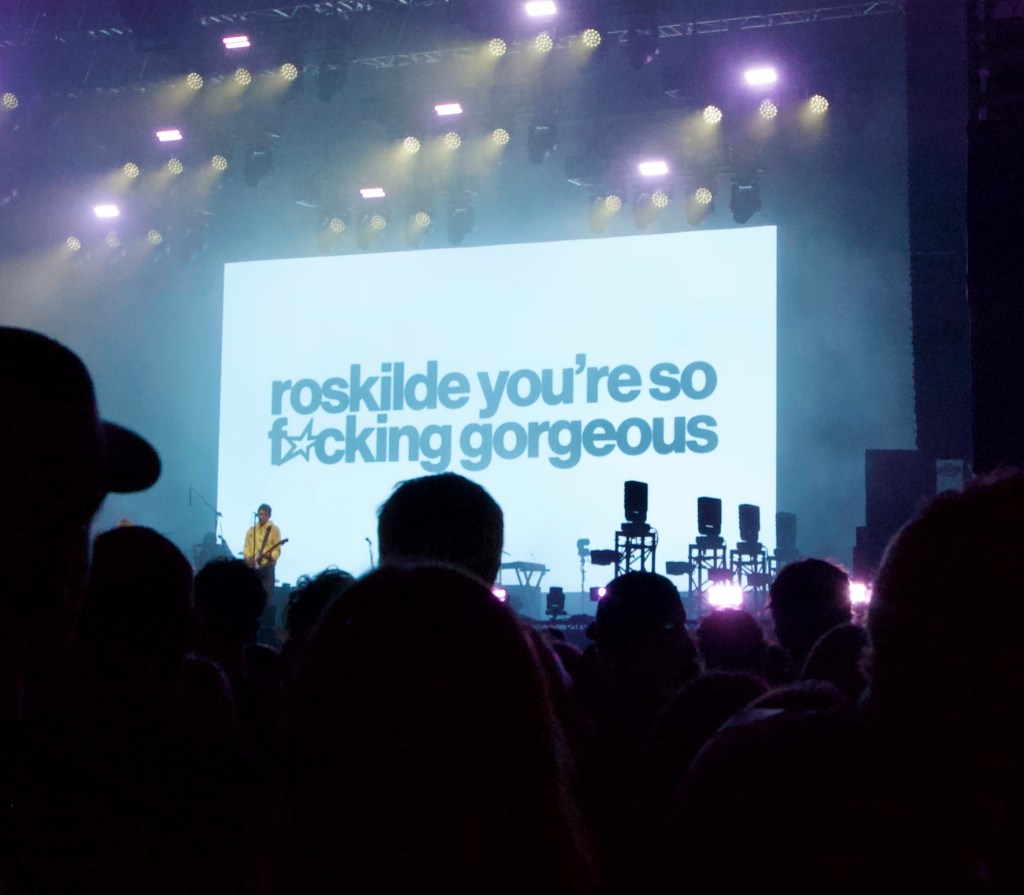
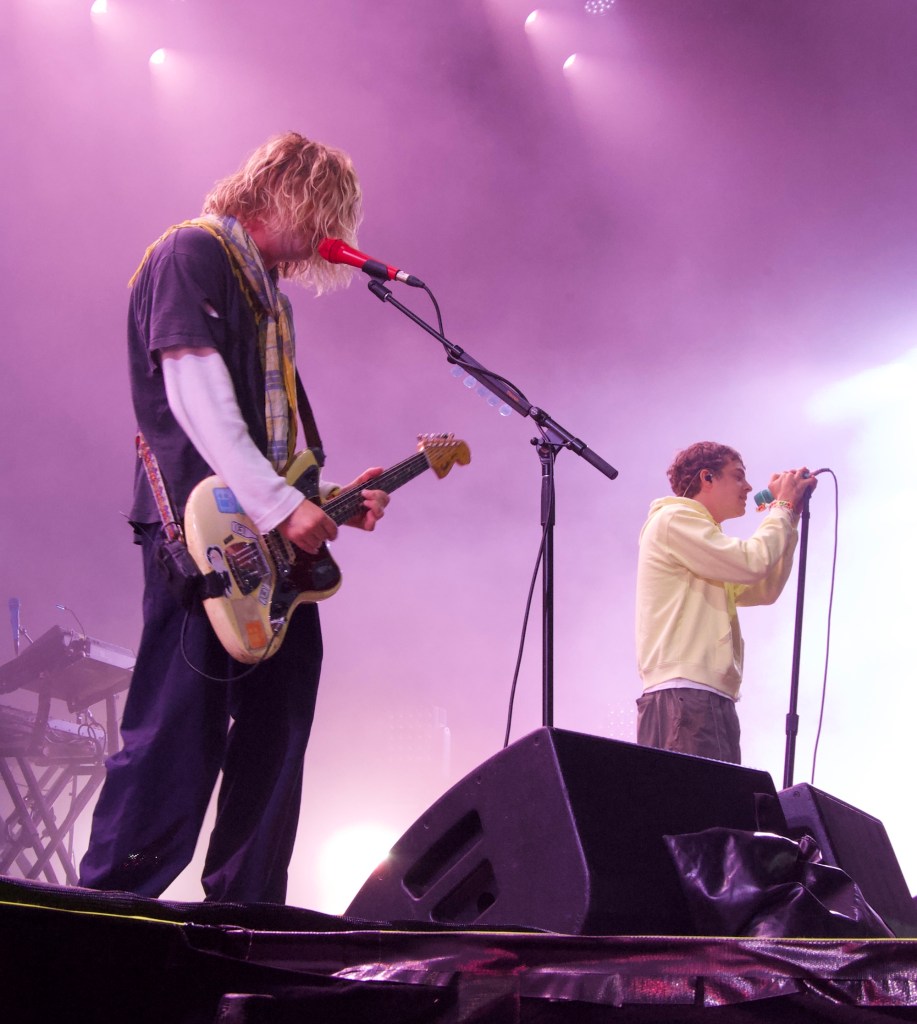
Before heading off to the photo pit, I went to suss out the vibe for the Royel Otis gig. And I was genuinely amazed by what I saw. Despite the heavy rain that stopped literally minutes before the Aussies’ slot, the crowd was already spilling out of the covered tent area. Considering that Arena is the second biggest stage at Roskilde Festival, it’s a testament to the Sydney outfit’s meteoric rise to fame over the last few years.
The indie pop-rockers didn’t disappoint. Having seen the band three years ago at the Reading Festival in the UK, I can see how much they’ve grown as a live act. Gaining the much-needed confidence but managing not to lose their Aussie laid-back vibe at the same time, they had the audience at the palm of their hands.
Punters were super engaged and entertained during the gig. Especially since the set was structured in a very dynamic way, jumping straight from the duo’s early banger “Sofa King” to the catchy rendition of Sophie Ellis-Bextor’s cover of “Murder on the Dancefloor” (which was slightly more extended during the gig). The band also invited everyone to help them sing their cool rendition of The Cranberries’ “Linger”, and played their latest release, the pretty “Sweet Hallelujah”.
With such a warm reception, the Sydneysiders were very appreciative of the experience. Guitarist Royel Maddell claimed the show at Roskilde Festival was “a dream come true” and thanked the fans and organisers with the straightforward “You guys are f*cking incredible.” While vocalist Otis Pavlovic concluded simply: “This is crazy.”
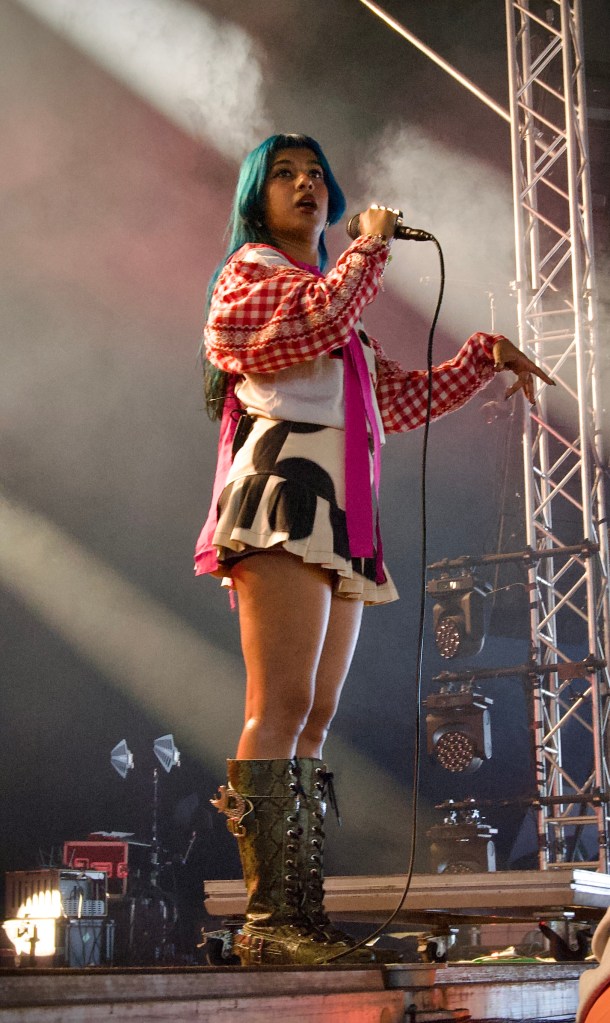
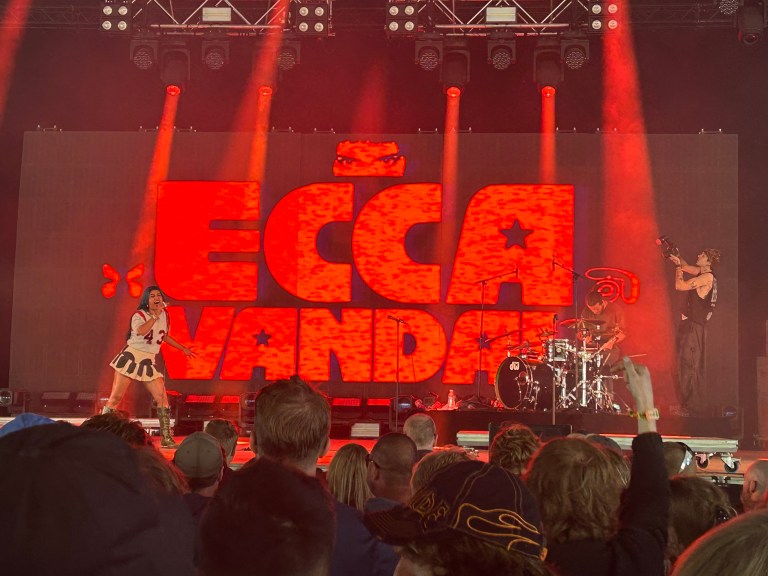
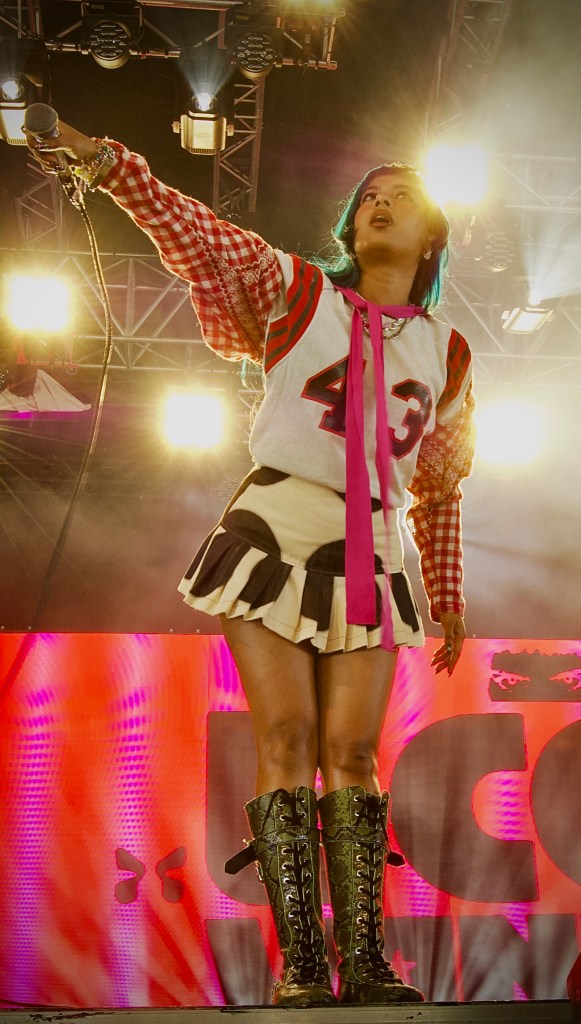
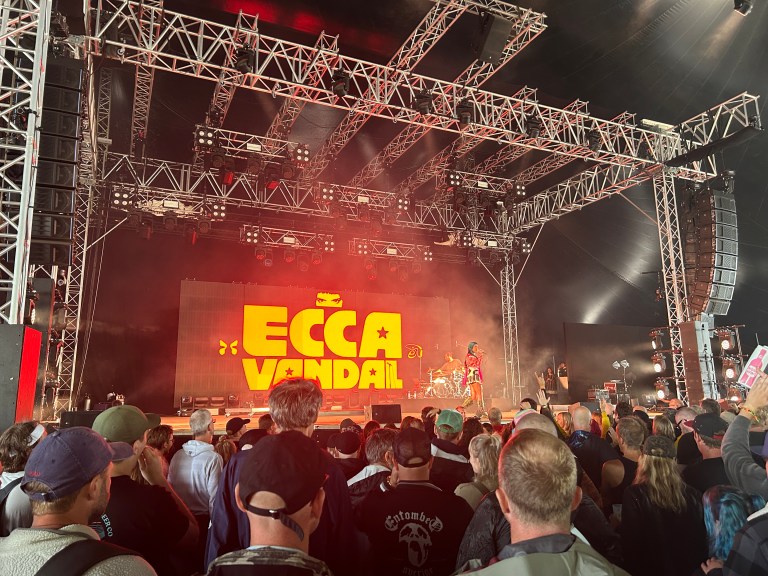
Ecca Vandal served bangers only from her debut album, from the first single “Bleed But Never Die” to the most recent one, “Vertical Worlds”. In her signature DIY punk style, recreating the colourful music videos featuring her drummer, she danced her way frenetically through the set.
Shooting pics from the pit for the first three songs with my back to the audience, I couldn’t gauge the engagement. But when I joined in on the fun on the other side of the barrier, I had no doubt whatsoever that the Melbourne-based artist, creatively blending genres, provided the right conditions for proper rocking out.
It’s worth noting that Ecca Vandal’s high-energy punk belters are not easy to sing live. But the audience’s rowdy response to the set proved that it’s more about the communal headbanging experience than vocal precision. That’s because during “Cruising To Self Soothe”, the artist encouraged punters to start a mosh pit. “I wanna see the energy pick f*ck the right up,” she demanded. And that’s what she got.
Interestingly, though, it wasn’t only her fans who rocked up specifically for that gig. An American journo I spoke to in the photo pit called the Aussie singer “a great personality” he was not only keen on photographing but seeing live again as a genuine supporter. And I reckon that sort of nod is the best recommendation an artist can get.
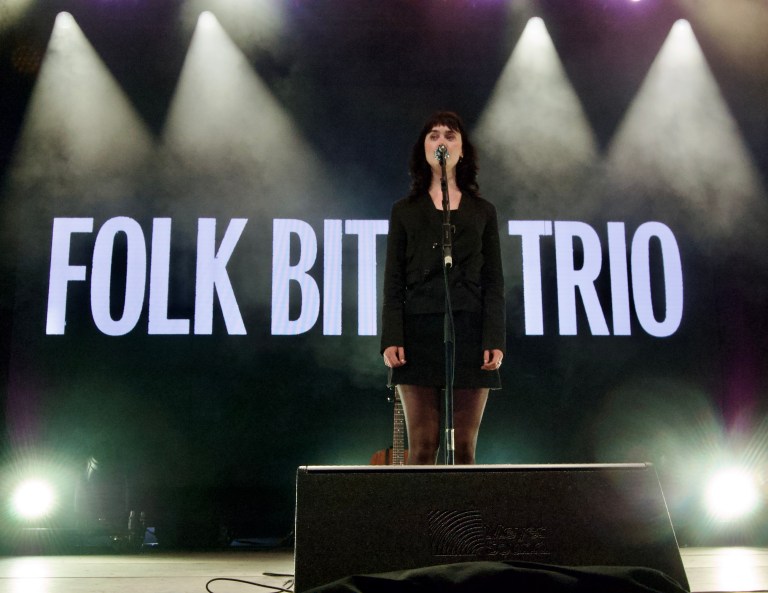
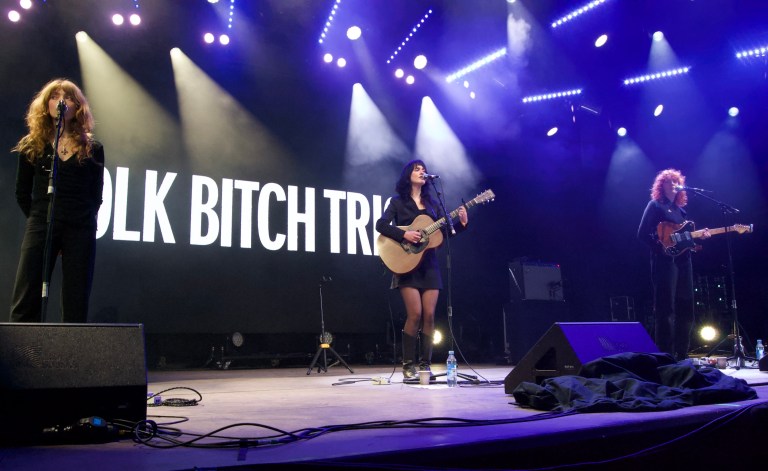
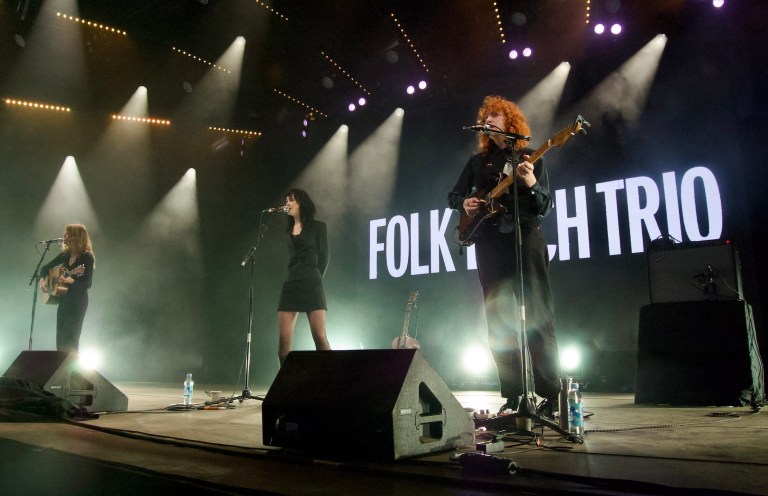

Friday was a pretty gloomy (or typically Danish?) day weather-wise. So when I arrived for the Folk Bitch Trio‘s (FBT’s) set, the new Fauna stage was already pretty packed.
I’m sure a lot of punters showed up to see the Melbourne-based indie folk group out of curiosity that day. Because, to be honest, their sound is fairly different to what you typically hear at Roskilde Festival. It’s the definition of “let the music speak for itself”, so the whole performance setting is minimalistic: from the visuals to the band’s outfits. What you get instead are three perfectly harmonising female vocals, accompanied by acoustic guitars and nothing else.
Yet, the FBT performance translated pretty well as a mellow, enveloping Friday afternoon experience (the band were on stage at 3 PM). You could tell the trio were stoked to see so many faces at their show. They acknowledged that as well, stating “Whenever we’re overseas and travel to a country where English is not spoken every day, it’s never lost us that you listen to our music, hear our words and understand them.”
It was their first time in Denmark, too. And they hinted that, the next time, they might learn some Danish. Which is a clear indication that Roskilde Festival’s programmers nailed that particular booking. Judging by the audience’s reaction to the band’s set, it looks like both the punters and FBT would be more than happy to do it again sometime.
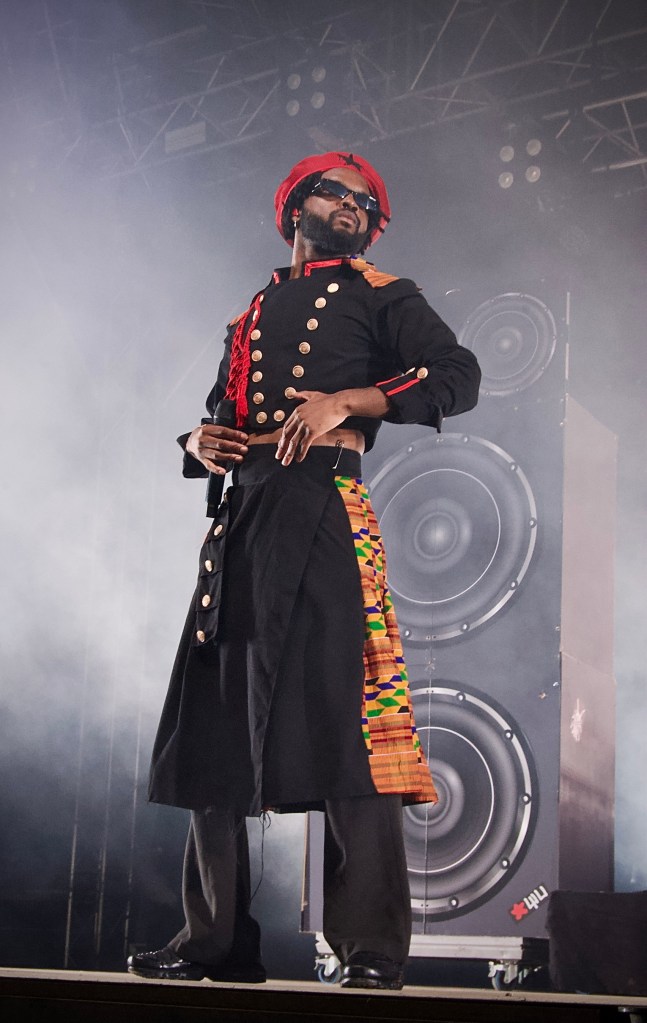
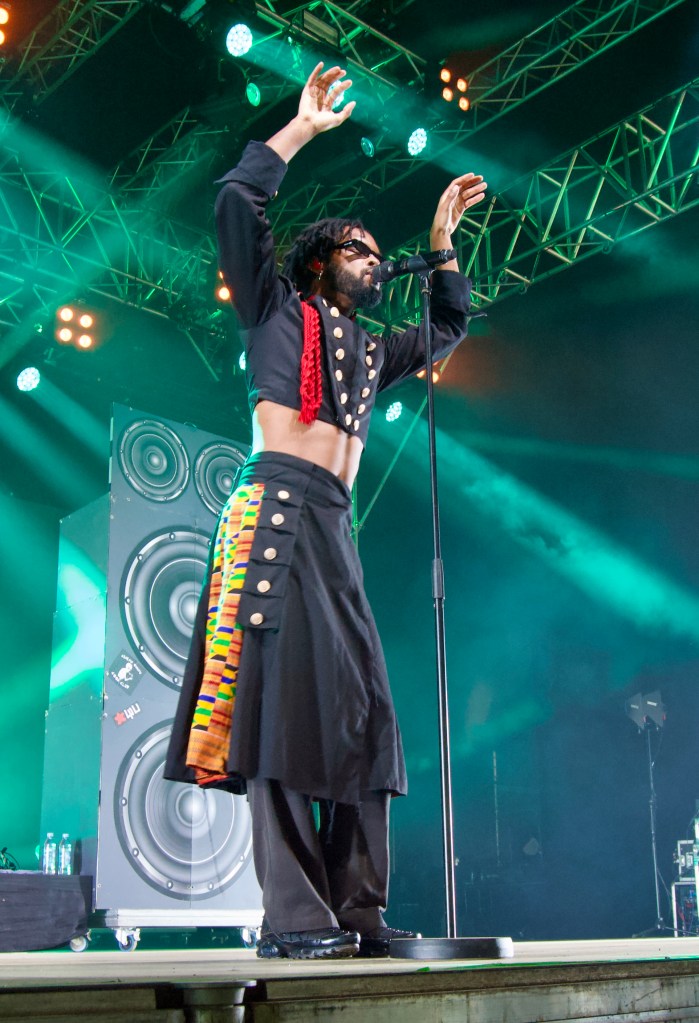
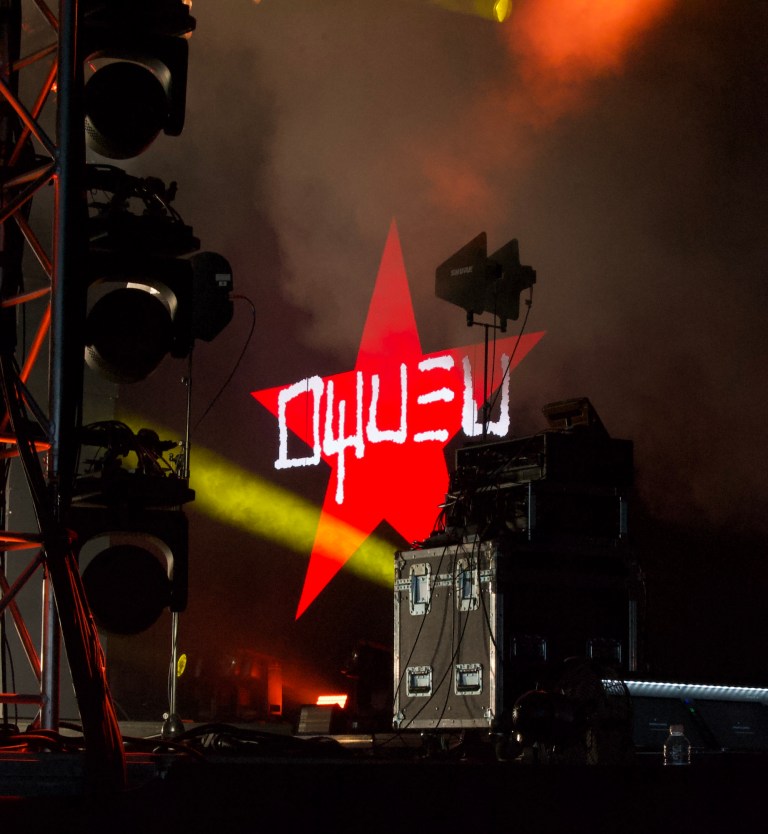
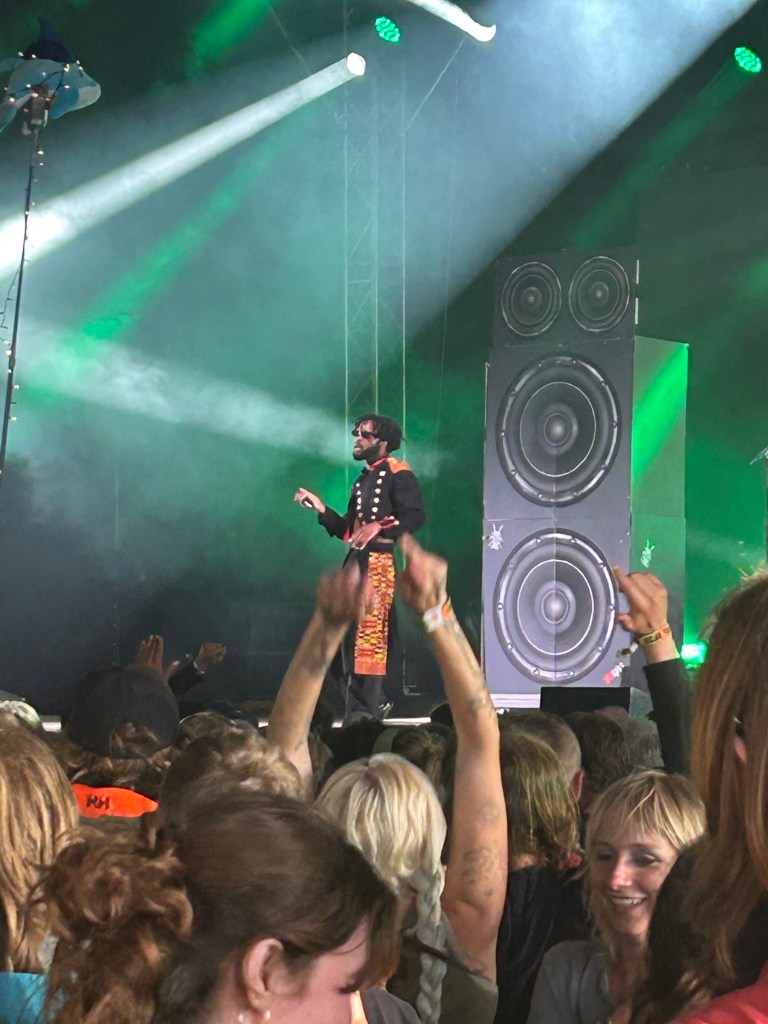
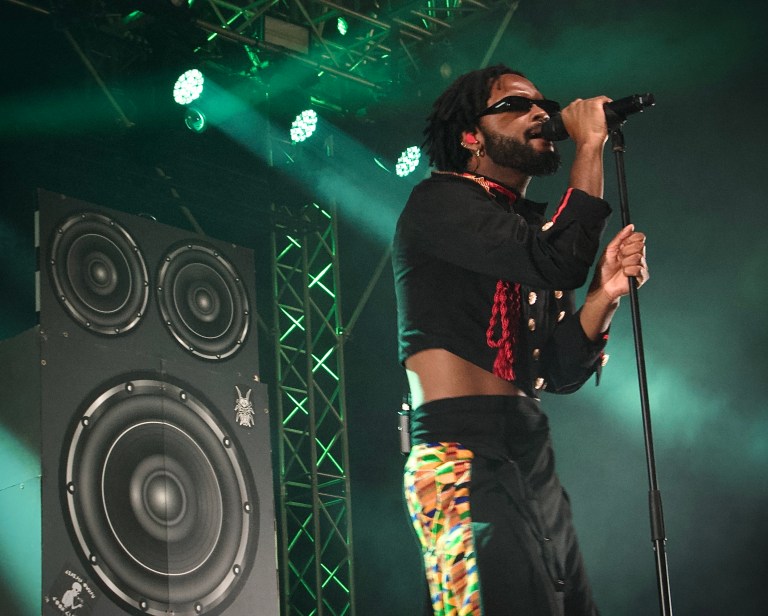
Genesis Owusu might have been a last-minute addition to the festival bill, but his show was definitely first-class, in all its aspects.
It wasn’t the first time I saw the Canberra-based artist perform, so I pretty much knew what to expect. The muso always manages to draw people in with his high-energy sing- and jump-alongs. Most importantly, however, he has a blast himself while he’s at it.
His set was packed with songs spanning Genesis Owusu’s entire career. The energy level at the gig was also definitely marked by the undressing sequence, which culminated in another highlight. The muso decided that “Stay Blessed” was the right moment for a close(r) encounter in the crowd pit.
He also recognised the rapport built with the fans by dedicating “One4All” to them, saying: “For a beautiful audience, there’s always a beautiful song.” And something tells me he’s also going to remember the show in Denmark for longer, too.
Australian music is this blog’s primary focus, but many other acts are worth highlighting too.
American gothic country songstress Ethel Cain has definitely won me over with her soaring vocals and beaut set. So has Lily Allen, who gave a theatrical performance of her excellent tongue-in-cheek record “West End Girl” in its entirety.
Hip hop artists delivered strong performances overall, including the most prominent Danish female rapper Tessa, the legendary American duo Clipse, Egyptian Marwan Moussa (rapping in Arabic!). and – do I even need to mention the obvious? – Kneecap.

I found a new fave electronic artist in American DJ Nick León (who, by the way, produced Rosalía’s breakthrough album, MOTOMAMI back in the day). And on that Spanish note – Bad Gyal definitely convinced me that she’s a force to reckon with in the reggeaton world (which is not my go-to music genre, but she somehow made it more palatable).
Finally, Roskilde Festival’s Head of Music’s tip, Getdown Services, turned out to be a spot-on recommendation. The Bristol duo are another proof that not taking yourself too seriously in the music business can handsomely pay off when done right.
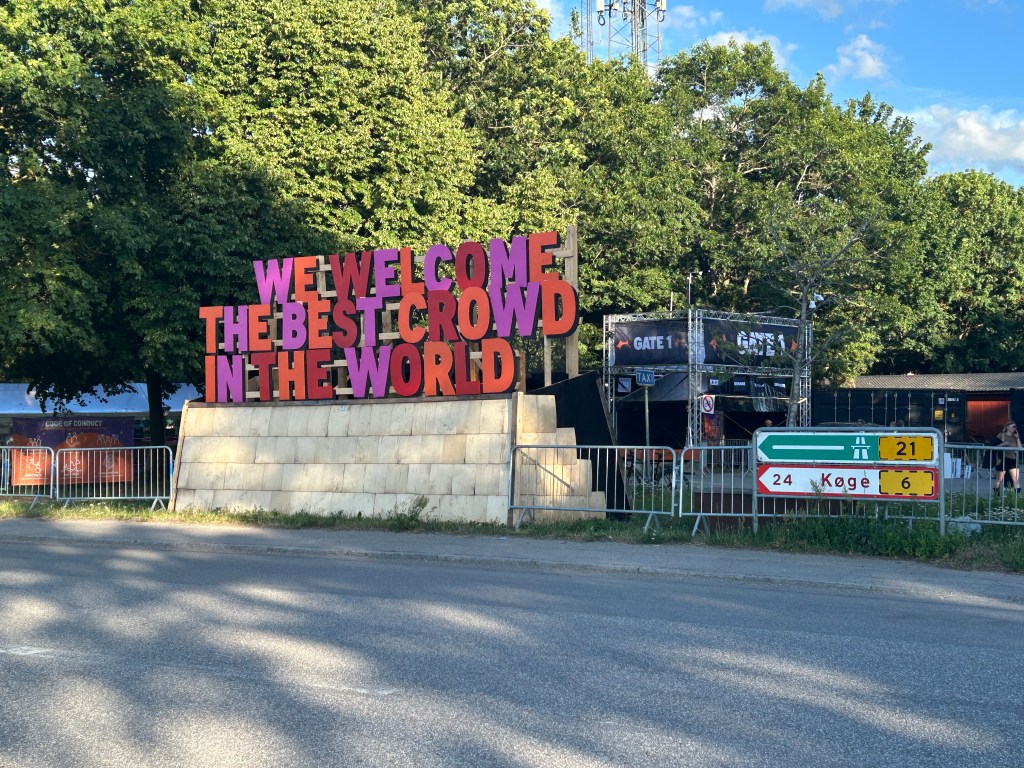
The 2026 edition was Roskilde Festival’s 54th in history. The event was sold out weeks before the kick-off, welcoming 140,000 participants to its vast grounds in the otherwise quiet Danish city. Hence, the Roskilde Festival Charity Society expects a record contribution to charitable causes following this highly successful run. And that means the 4-pillar approach, fusing music, art, activism and community, has worked yet again.
Royel Otis pretty much summed that all up by modifying lyrics to “Sofa King”. Displaying the “roskilde, you’re so f*cking gorgeous” banner, I’m pretty sure they spoke for many festival participants, too.
I couldn’t agree more. So see you next year, Roskilde Festival? I’m keen AF to see which Aussie acts you’ll program in 2027.
All photos and live footage by Silly McWiggles
Find out about other music projects leveraging music, art and activism:
NAIDOC Week 2026 Special: “At the end of the day, I knew who I was” – Aboriginal/Tongan hip-hop artist Crooked TP on his upbringing, mental health struggles and making music to hit every ear – Interview
When I chatted with singer Jimmy Kyle from the punk band Chasing Ghosts about their album Therapy for NAIDOC Week last year, I thought it would be a one-off special episode. But this year, I’ve come across a First Nations musician with another captivating story. It’s a story about identity, the healing power of music,…

TRANSGENRE returns for Volume III. How “shut up and do your own festival” became the push to celebrate trans and non-binary voices in Australian music. Podcast interview with Ellie Robinson
In 2022, organisers of an Australian music festival were called out for a lack of diversity in the line-up. When confronted about it, they stated there was not enough talent among female and non-binary acts, which they considered “the best of the best” for their event. Music writer Ellie Robinson thought it was “absolute BS.”…
How the Environmental Music Prize recognises Australian artists campaigning for climate and conservation. Video interview with Edwina Floch
What are the most frequent topics in the music you listen to? Regardless of your go-to genre, I bet heartbreak, relationships in general, and some kind of loss make the list. After all, they are all universal topics that pretty much anybody in the world can relate to at any given point in time. What…

