

Led Zeppelin, Janis Joplin, Elvis Presley, The Beatles. They are some of the most recognisable names in the modern music history. Trailblazers in their respective genres. Acts whose music I cherish and respect.
I wasn’t around when they recorded their hits, played memorable gigs, and gave famous interviews. But I was 14 when Silverchair released “Tomorrow”.
And even though I rarely review books, getting my hands on Love & Pain: The Epic Times and Crooked Lines of Life Inside And Outside Silverchair was like Christmas come early. So here’s why you should read it, too.
PART 166 OF “AM I EVER GONNA SEE YOUR FACE AGAIN?” A RANDOM COLLECTION OF UNKNOWINGLY OBVIOUS FACTS ABOUT AUSTRALIAN MUSIC SCENE
It’s been nearly a month since Love & Pain was published. Serious industry reviews have already been written, interviews in influential news outlets done and dusted. The social media storm has calmed down. Now is the perfect time for Silverchair fans to enter the conversation.
I guess I don’t have to introduce this Newcastle band. Silverchair remains one of the most successful and awarded acts in their home country and one of the most famous rock bands in the world. That’s a fact.
The famous Aussies and I have a few things in common. I’m the same generation as Ben Gillies (drums), Chris Joannou (bass) and Daniel Johns (vocals and guitar). Like the Chair members, I grew up on the music made in Seattle in the 90s. I also recently found out we share the love for grunge reps that are still around, Pearl Jam.
So, let me flag this here right away. I approached Ben and Chris’s publication from a music fan’s perspective first and foremost. Because not every day do you get such an intimate glimpse into a band whose story you witnessed as it happened.
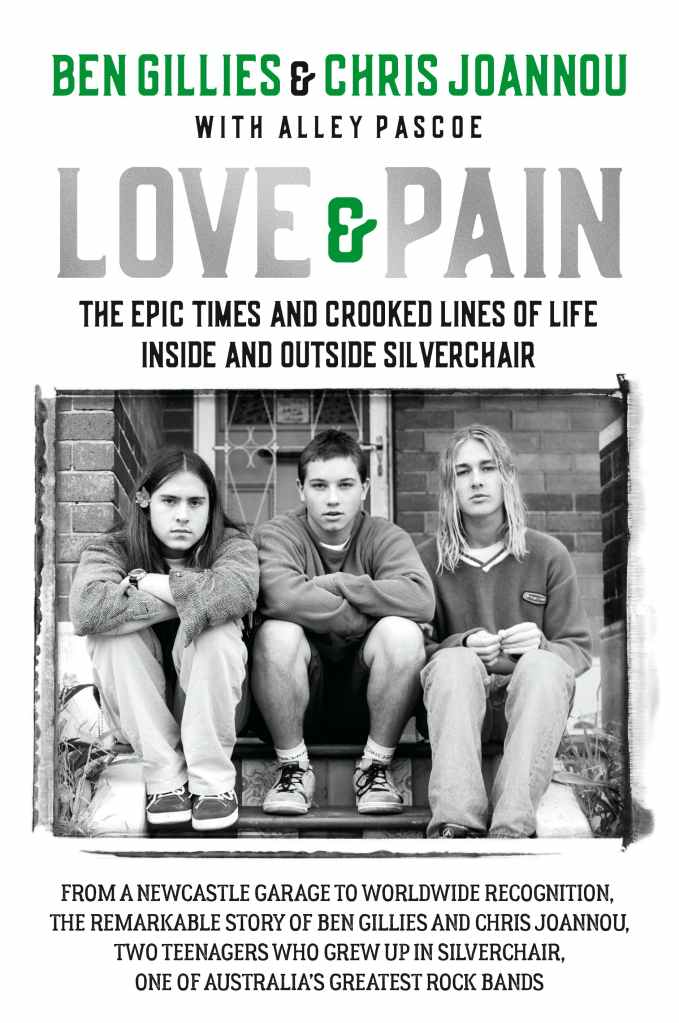
Yet, when the book dropped on Sep 27th, 2023, I had doubts whether I should read it at all.
There’s no better way to say it, so I’ll just be blunt. When 2/3 of a group decides to publish a memoir, it normally means trouble. And this time, it was no different. Before I knew anything about the contents, the news shitstorm had already hit me.
Firstly, I heard about the problems with licensing music for two episodes of “Australian Story: A Silver Lining” on ABC, where Ben and Chris talk about their experiences in Silverchair. Then, I read Daniel’s claims on his socials that he’d never received the book’s copy, so he didn’t feel comfortable helping to promote it. That was all that was needed for the media frenzy to start.
Don’t get me wrong. I have enormous respect for all three musicians. And it’s not about who’s right or wrong in this case. We all know Silverchair ended badly. The chances of the band getting back together are virtually non-existent, too. And only the band members can clear the air between themselves.
But objectively speaking, seeing this bitterness continue until this day is a blisteringly sad thing for a Silverchair fan. With all due respect to Ben, Chris and Daniel, who all have their reasons to feel the way they feel (and ultimately, the book talks about it, too), the fans need some closure, too.
It’s not a secret that, in Silverchair and after the band split up in May 2011, the spotlight has mostly been on the frontman. Hence, I’ve been fairly up-to-speed on all the Daniel Johns projects.
I thought his solo music adventures and the DREAMS collab with Luke Steele were interesting departures from Silverchair. But some (controversial, in my opinion) appearances on Aussie TV, especially on Andrew Denton’s Interview, and the chat with Carrie Bickmore on The Project, got me and many other fans rather worried.
Then, there was the Who is Daniel Johns? podcast I binged in December 2021. I also devoured the mini docu-series on YouTube called Inside The Mind of Daniel Johns from 2022. I’ll never forgive myself for not visiting the Past, Present & FutureNever exhibition in Melbourne in 2022. And when the What If The Future Never Happened? movie finally sees the light of day, I’ll probably be the first to watch it.
I also admire Daniel for the many noble and charitable projects he’s involved in and his creativity on all art fronts. I’d be mad not to – and this is my groupie confession – he was one of my first music celebrity crushes. (Soz, Ben and Chris.)
But in all that noise, I started wondering about the other Silverchair members and what they might have been up to in all those years. I’ll be honest – I didn’t even know if Ben and Chris still made music, were on social media, or even hung out together. I’m sure it’s because I didn’t proactively seek answers to those questions. It’s also because they are much more low-key than Daniel, for different reasons you’ll read about in the book.
And then, I stumbled upon Tim Blackwell’s interview with the pair on his Introducing podcast. The one thing I clearly remember from it is that both felt like they wanted to tell their side of the Silverchair story. And I thought, “That’s right. I want to hear that side, too.” So, I got myself a (sadly, just a Kindle for now) copy of the book.
Now, the last time I spent over two weeks straight “with a band” and its entire music catalogue was probably in my early thirties. (And my God, how fucking good are the Silverchair songs today!) That’s also thanks to Love & Pain. It’s definitely not a book you read in one go and put back on the shelf.
I mean, yes, you could totally finish the 350+ pages in one day. The stories about the gents’ shenanigans and the personal, intimate insights are fascinating and entertaining. That’s exactly what fans want. But, sometimes, I needed to pause and process what I’d just read. Ben and Chris offloaded heaps of confronting emotions in those chapters. So just a heads-up: it’s a full-on, cathartic experience. For both sides.
Sometimes, I also wanted to feel like I was “living” those moments they were describing. So when they talked about recording Freak Show, I’d listen to that album on repeat. When they reminisced about the Big Day Out festival, I’d look online for footage of their performances. And when they’d mention a particular ARIA Awards night, I’d check if there were any pics or interviews from that time.
I also found a new appreciation for the Young Modern record. I discovered my favourite song is no longer “Miss You Love” but “Without You” (that – surprise, surprise – was written in the Neon Ballroom era as well). I was taken aback by how fitting the lyrics to “Pure Massacre” or “Anthem for the Year 2000” still are. And I realised they released “Pins In My Needles” and “Hollywood” in 2020, that I – somehow – completely missed out on.
Basically, I went through nearly two decades of my own life with the band I still love. I guess that’s what you call a fully immersive experience, right?
I wasn’t immediately in love with the book, though.
The way it’s structured is actually pretty straightforward. It tells the story chronologically from the perspective of the drummer (Ben) and bass player (Chris). That logical approach definitely helps the reader understand how the story unfolded. But some throwbacks to significant moments in the band’s history are interjected in between. Sometimes, those transitions might feel a bit random and don’t necessarily fit the context, in my humble view.
But let’s face it – the book wasn’t written to compete for a Pulitzer Prize. It’s two musos reminiscing about their glorious and less-glorious days in a band that changed their (and many other people’s) lives forever. So, in the end, it grew on me the further I got into the story. Especially since they acknowledge the Silverchair fans on various occasions, emphasising that it’s “a special feeling, knowing we’ve been a part of someone’s life and that we’ve scored their coming of age.”
Funnily, when I found out the book was called Love & Pain, I thought the title was a bit cliché, more suitable for a Jane Austen romance. And I’m stoked to say I was completely wrong. Because love and pain are exactly what I felt going through those pages.
I was touched when I read they’d funded a TAFE music course in their high school years (that – by the way – they finished themselves, and their “final work” was the Frogstomp record).
I was chuckling at the part about being mistaken for Backstreet Boys and leaving the American boy band’s fans disappointed when it turned out it was “just” Silverchair getting out of the tour bus.
I was surprised Daniel and Ben temped at a radio station at one point and never used the “We are Silverchair” card.
I was jealous (in a good way) that they eventually got to hang out with Pearl Jam.
I shed a tear (or two) for Ben’s struggles with mental health and Chris’s – with cancer.
And I was heartbroken reading the chapters about the bitter break-up.
Mixed feelings and conflicting emotions are what makes this publication authentic to me. It seems that going from one extreme to another was the definition of the “Silverchair life” for all three members, albeit to a different extent.
Obviously, this book is also full of little gems – music industry insights and fun facts. Like stretching the label’s credit card limit in a hotel bar and “wheeling” the tour manager (!) onto the bus. Or ignoring the “etiquette” between the bands touring together, meaning you can only prank your counterparts at the last gig. Or what it’s like for celebs to meet other celebs or their role models. You know, stuff like that.
But the Silverchair story is unique for another reason. And it’s not necessarily a good thing.
The way it usually works is this. When you’re a kid, you’ve got dreams, but you’re a nobody. And then you grow up, work hard to make those dreams come true, and become somebody. In the case of two out of three Silverchair members, it went exactly the opposite way. From being on top of the world until their early thirties, it seems Ben and Chris have now fallen into some sort of oblivion in the music biz. At least that’s how I see it.
Maybe that’s why the way both Solverchair members perceived their roles in the band struck me so much in this book. Many times, I had the impression they talked about themselves in a self-deprecating mode. As if they weren’t equal members of the group. Which is funny if you think about it. Because they surely lived the rock’n’roll life on the outside.
So, I finally need to address the elephant in the room. They do speak respectfully of Daniel and the good Silverchair times they’d shared. There’s actually a quote from Ben half-way through the book that really moved me:
“It’s not that I didn’t appreciate it at the time, but I didn’t fully understand the rarity of the feeling I got when I was making music in a room with Chris and Dan. It was the best feeling in the world. Part of me must have thought that was the way all bands felt when they played together. (…) It wasn’t until I started playing with other artists much later in my career that I truly realised how special that Silverchair spark was.”
Okay. So how is it even possible that things spiralled and got out of control so quickly and so dramatically?
Chris mentions, “We were brothers first and bandmates second. Maybe that wasn’t clear enough. I thought it went without saying, but maybe we should have said it. So many things went unspoken.”
You can tell both the drummer and the bass player were used to taking a back seat in the Silverchair story until releasing this book. It’s evident, for instance, in the Diorama-making period. This is when the creative control was already 100% in Daniel’s hands. Chris puts it in perspective when he writes, “Any record was better than none”. How profoundly sad…

From left: Ben Gillies, Daniel Johns, Chris Joannou
Unfortunately, those overwhelming feelings of resignation and uneasiness become predominant in the second part of the book.
Diehard fans will surely want to know what exactly caused the rupture within the band. And I doubt it’s a spoiler to say there were quite a few things that didn’t work towards the end. They have been widely speculated on in the press over the years. But both book authors agree the reasons were primarily substance abuse and not communicating well, especially about the band members’ feelings.
The first factor didn’t surprise me at all. As bad as it sounds, it’s still quite common in the music industry today. But the latter is quite unsettling. And I can only imagine how devastating it must have been for both Ben and Chris to find out about the “indefinite hiatus” from a press release.
There’s one phrase repeated quite frequently throughout the book, “We were just teenagers.” And it’s essential to encode the message it tries to transmit.
Ultimately, this is a story about three regular kids from Newy who ended up in a pretty famous band. It’s a tale of a group of mates who got a bit more than they’d signed up for in life, in the good and the bad sense of it. It’s also an account of an incredibly intense life and relationships that have not stood the test of time. And finally, it’s proof that show business is the worst place to grow up in.
Watto, the band’s manager, is quoted in the book with a pretty on-point summary of that last point, “I get it, (…) you guys have never lived a normal life. From the start of high school, you lived an extraordinary life with the highest of highs. It was like you were riding on the tip of a twenty-foot wave, and then the wave would crash, and you’d just be back at home like nothing ever happened. Because you’ve always lived riding these highs, you’re going to chase them wherever you can find them.”
I’m not a famous muso, but I’d say it’s hard to disagree with that.
One of my best friends from Oz lives in Newy. I remember visiting her once a few years ago. We were strolling on the beach, and she mentioned Daniel lived somewhere in that area. And don’t judge me, but we both had a “fan girl moment” then, too.
We talked about how amazing it was to be on Silverchair’s turf. In the city where the members grew up. Where it all started for them. And where they wrote some of those iconic songs people still blast on their fancy stereos a quarter of a century later.
In the end, despite all the bad things that all three members have faced together and separately, “Silverchair was three mates making magic in a childhood bedroom.”
So yes, I believe Ben Gillies and Chris Joannou deserve to tell their side of the Silverchair journey. It’s not a pretty one, that’s for sure. And if I could feel that love and pain reading the book, I bow my head to both gents for having the courage to finally share their perspective and open up about some exceptionally difficult moments.
Like the drummer and bass player, I also feel they “didn’t get to run the full course” as a band. And it “hurts to imagine what could have been.” The truth is, I almost tear up typing these words. But that part of their story is not in my or any other fan’s hands.
So thank you for the music, Silverchair. You’ll surely go down in the music history books alongside The Who, Amy Winehouse and Pearl Jam. And thank you for this book, Ben Gillies and Chris Joannou. At least I got some answers.
Love & Pain: The epic times and crooked lines of life inside and outside Silverchair by Ben Gillies and Chris Joannou
Published by Hachette Australia on September 27, 2023
A digital version is available for Kindle on Amazon
More about iconic Aussie acts:

Nick Cave, Australia’s greatest showman, delivers an electric performance at London’s All Points East Festival in 2022. Gig review
Anyone who has been to a Nick Cave and The Bad Seeds’ concert will know it’s an experience like no other. The explosive energy on stage, the uniquely close interaction with fans, and the awesome journey through the artist’s vast catalogue are worth every penny. And even though everything has probably already been written about…


My Aussie faves RÜFÜS DU SOL won Best Dance/Electronic Recording at the 2022 Grammy Awards. And I’m loving their reaction to it
My relationship with the Grammys is similar to the one with the Oscars. I want a quick and painless divorce. But I’m willing to put it on hold every time an Australian act wins the award. And especially when that act is Rüfüs Du Sol. PART 99 OF “AM I EVER GONNA SEE YOUR FACE…

Let’s talk about Kylie
“A woman so famous we only need to say her first name”.* The highest-selling Australian-born artist of all time. Kylie Minogue, often known professionally as just Kylie. Whether you’re a pop music fan or not, I bet you know at least one of her songs. And it’s pretty hard to ignore her accomplishments Down Under…
 Silly McWiggles blog & podcast