
BIGSOUND might get all the spotlight, but Australia has more worthwhile music conferences throughout the year.
The Regional & Remote Music Summit is a fairly new addition to the scene. This year’s gathering at Berrin/Mount Gambier, SA was only its third edition. Over two days packed with panels, presentations, industry updates and live music showcases presented by Music SA in 2026, artists, industry professionals, community leaders, and policymakers came together to continue the nationwide dialogue about the future of music in regional communities.
While some topics painted a worrying picture for the future, my general impression was that exciting opportunities, unexpected trends, and the overarching sense of community and collaboration clearly outweigh the challenges. So here’s what I learned.
ART 282 OF “AM I EVER GONNA SEE YOUR FACE AGAIN?” A RANDOM COLLECTION OF UNKNOWINGLY OBVIOUS FACTS ABOUT THE AUSTRALIAN MUSIC SCENE
Let’s set the scene first, however. What do “regional” and “remote” places mean in the context of the Australian music industry?
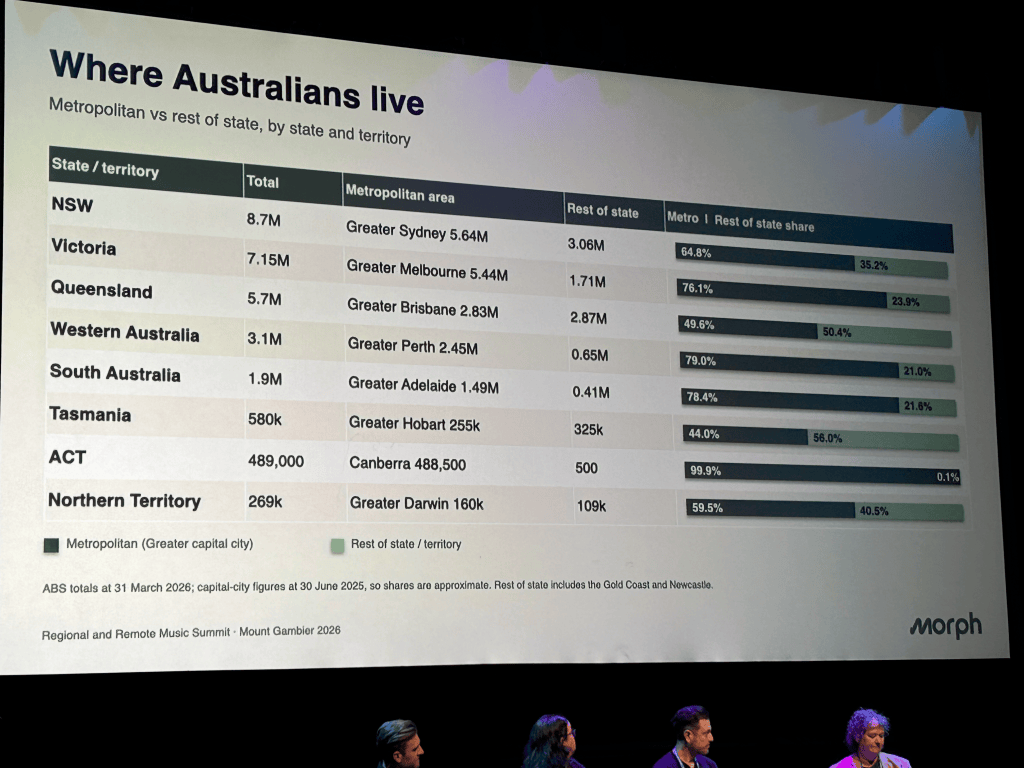
Ros Abercrombie, the Executive Director for Regional Arts Australia, explained it with data. It’s 85% of Australia’s landmass, with a population of about 10.5 million people, where approximately 30% of artists live and create. And I have to admit – I didn’t have a clue how big that market really was.
According to research, many people, especially millennials, are keen to move to regional areas in the near future, too. Mostly for economic reasons – a place within 1 hour or 2 hours away from a metropolis is already considered regional (and thus more affordable), but is it’s still a pretty manageable distance to the capital. This is the case of Ballarat in VIC, north-west of Melbourne or Wollongong, NSW, south of Sydney, for example.
This socio-demographic shift means growth is already underway and likely to accelerate.
When it comes to the difference between “regional” and “remote” places, many delegates and speakers were the best examples of it. While there were folks from the Limestone Coast in SA (where the summit took place), which can be reached fairly easily by land and air transport within a few hours from both Melbourne and Adelaide, some others hailed from areas accessible only by road, with a trip of approximately half a day to the nearest capital city.
When asked about their understanding of the concept, audience members shared hilarious definitions. One person hit the nail on the head, stating: “Regional is not a capital city but still has a McDonald’s. Remote is 200 km from the nearest Big Mac.”
Lastly, even though the regional and remote music scenes are analysed in a similar context, “it’s not one size fits all”, as Music SA’s CEO Christine Schloithe pointed out when opening the summit. Those little pockets of creativity have very specific needs and expectations, tell unique stories, and exist in vastly different circumstances, creating distinct opportunities.
That was the foundation for the nine carefully curated panels and two industry updates. Here are my key takeaways from all of them.
Takeaway 1: The exchange of information needs to come from the communities, not the other way around
The opening panel, ‘Designing the Future Regional and Remote Music System in Australia’, kicked off the summit on a high note by looking at different ways of bringing music to communities across Australia.
Alex Pinte from Wildlive brought examples of how his solar-powered sound system helped build audiences in places where artists previously didn’t even stop on tour. But he also pointed out the reality of organising events in remote communities, which is far from ideal. The lack of infrastructure (i.e. to recharge EVs) and music rooms with proper equipment are major obstacles.
Music NT reps Mark Smith and Catherine Satour weighed in on the First Nations participation in the industry. They acknowledged that “communities want to see themselves on stages,” and “music will happen regardless of circumstances”. But Aboriginal artists’ representation in the regional music industry is still not where it should be.
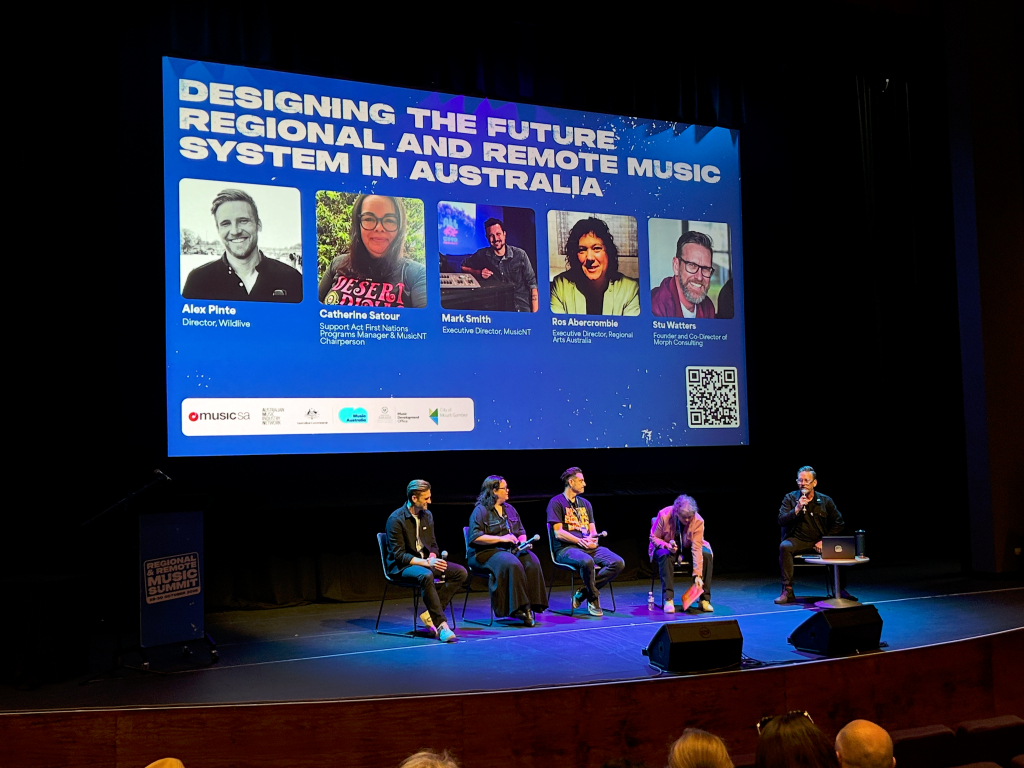
The panel’s host, Stu Watters, Founder and Co-Director of Morph Consulting, also quoted stats from The Push’s recently published report on youth engagement in the music business. The results prove that young punters are keen to participate in live music, but are blocked from it for external reasons (like high ticket prices).
A different panel, ‘How Do We Build and Sustain Success in Music?’, came to similar conclusions.
Dr Ben Green, a researcher from RMIT University, stated the obvious that we perhaps sometimes forget: Connectivity and connection are the ultimate reasons for music. Jana Hesketh, General Manager – Government, Communities & Impact, Queensland Music Festival (QMF), pointed out that each party in the music ecosystem has a different stake, objective and measurement of success. So the key is to find that sweet spot where everyone benefits, and success is similar for each of them. To which Grayson Rotumah, Co-Director of CASM (Centre for Aboriginal Studies in Music) at the University of Adelaide, added: “Whatever the community wants and needs is success.”
The consensus at the summit was that music events are not about gigs anymore. They’re more about a family day, a picnic, or hanging out with mates. Music is the excuse to come together. But because “music from community is by community and for community”, working with regional and remote leaders and reps should be a priority.
Takeaway 2: It’s important to create spaces where artists can actually make art without having to focus on all the external things
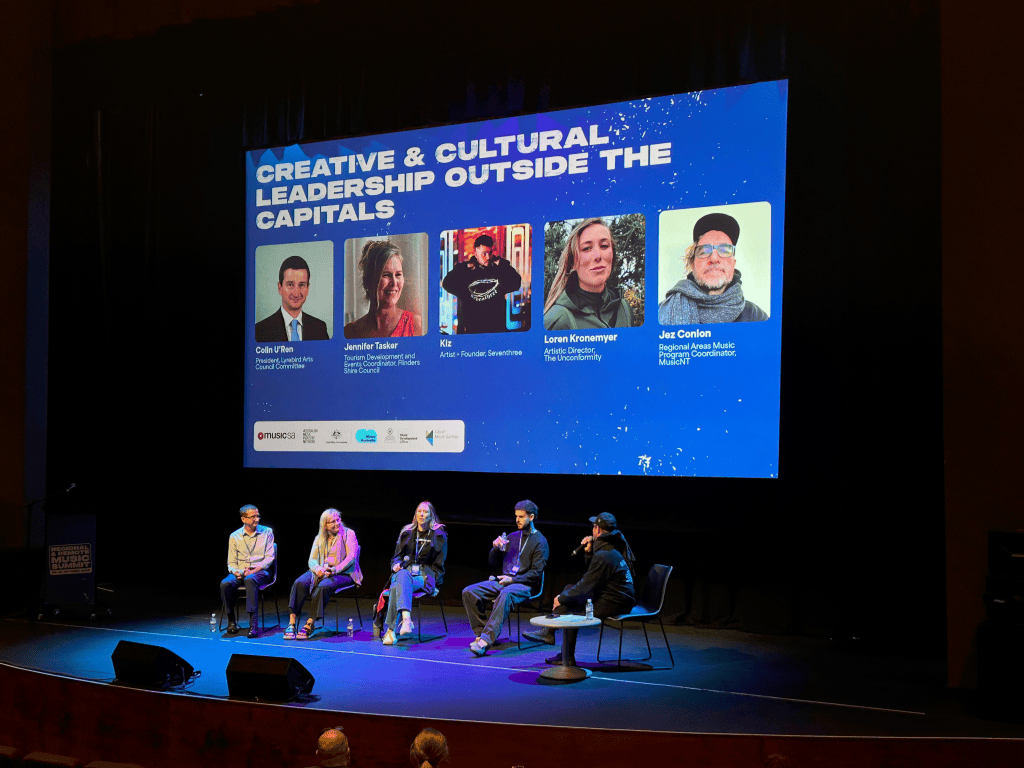
The ‘Creative & Cultural Leadership Outside the Capitals’ panel focused on fostering regional and remote music scenes. Unsurprisingly, the words frequently used throughout the discussion were: sharing knowledge, cooperation, building relationships, mutual respect and solidarity.
Loren Kronemyer from The Unconformity mentioned that instead of trying to adapt the same ready-made solutions everywhere, artists should be asked how they want to run their creative practices. Because it’s not the same story on the West Coast of Tasmania and in regional QLD. Hip-hop artist Kiz stressed the importance of leading by example and embracing being a role model for up-and-coming acts. Colin U’Ren, President of Lyrebird Arts Council Committee, observed that, in his experience, artists are generally not well looked after, i.e. by having no access to a green room or hospitality at the venues they play.
Capacity, understood as overcommitting and saying “yes” to everything, was another big topic. All panellists agreed that it’s a common thing for all creatives that takes a huge toll on mental health, but is frequently overlooked.
At the First Nations-focused ‘Yarning Strong’ panel, singer Bec Gollan put it like this: “I think we all know what ‘creative’ is – it’s not sitting down, filling out a form.” She admitted she usually skips the bigger live events. She’s simply not prepared to spend her time applying for a spot on the bill through an extensive selection process.
Many other delegates shared her point of view. So it looks like – finally – artists start prioritising their wellbeing over the constant chase of opportunities. And it’s a trend we all want to see become the new industry norm, don’t we?
Takeaway 3: DIY is (still) the way forward in regional and remote scenes
Some of the findings from the ‘How Music Lives in Places’ panel left me stunned.
Nicole Wright, Co-Director of Neighbourhood Productions, described her early experiences as a musician as “a bit weird“, sharing that “music wasn’t even offered as a subject in my school.” David Corbet from The Sound Doctor recalled a story he heard about Simon from Laneway who, when handing over his job, apparently labelled his proudest moment as “nobody died.” While Jack Lane, the owner of Rock Lock Records, called it what it is: “We’re doing too much – we’re stressed. We’re not doing enough – we’re depressed.”
But some interesting success stories were shared, too. Daan Stephens, founder of Gutwrench Records, talked about events he’s organised in unusual, alternative spaces in Canberra, like a bus stop, timing the performances with departure and arrival times. And Jack threw in a comment that he’d rather “put out a shit song than no song and put on a shit show than no show“ because there’s no such thing as perfection.
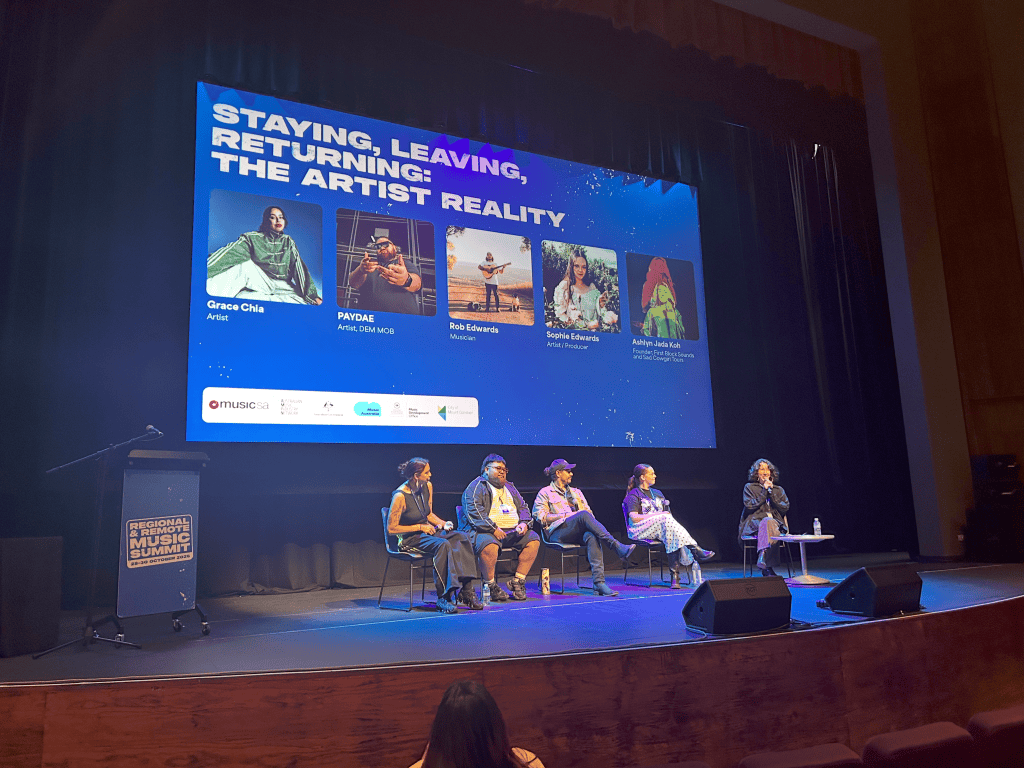
The panellists from ‘Sound places: Music in Local Government Ecosystems’ came up with similar conclusions. While we all know music doesn’t play a huge part in councils’ arts & culture policies, and sometimes there are no real venues where artists live and create, musicians need to be extra creative and look for smart solutions, like building makeshift stages.
Overall, the DIY model, instead of the polished model, was dubbed the way forward if we want things happening in regional and remote spaces. Music isn’t just about the artist anymore – it’s about the audience and the experience, too. So, as Nicole nicely summarised it: “Local people want to hear local stories. So they will automatically connect with them.”
Stay tuned for part 2 coming before the weekend, including three more takeaways, Music Australia’s update on the Australian scene overall, and footage from some cool showcases.
Here are more Australian music industry gatherings, projects and reports you should know about:

“Music is central to the daily lives of Australians.” My thoughts on the 2nd edition of Music Australia’s ‘The Bass Line’ report
In the last few years, Australia has started taking its music business a little more seriously. It is not just limited to campaigns encouraging audiences to support local artists. As more Aussie acts dominate charts and top festival bills overseas (like Tash Sultana, Dom Dolla or Parkway Drive), more people than ever have access to…

Any music tech enthusiasts out there? Perth’s ‘Hack the Pack!’ is the industry event just for you
Defcon is the largest hacking and security conference held annually in Las Vegas since 1993. Teams of developers and designers dive deeper into the aviation industry’s challenges at IATA’s (the International Air Transport Association’s) hackatons. The health community boasts a few events focused on creating ground-breaking solutions in medicine. Innovative technology is tried and tested…

The Aussie BBQ at Reeperbahn Festival 2024 proved that music from Down Under is ready to take over the world
What does Hamburg in Germany have to do with Aussie music? Normally, not much. But every year in September, the Northern German city hosts a massive event that brings together music industry professionals and fans from all over the world. For artists from other continents, it’s a perfect gateway to the European/UK market. And this…

