
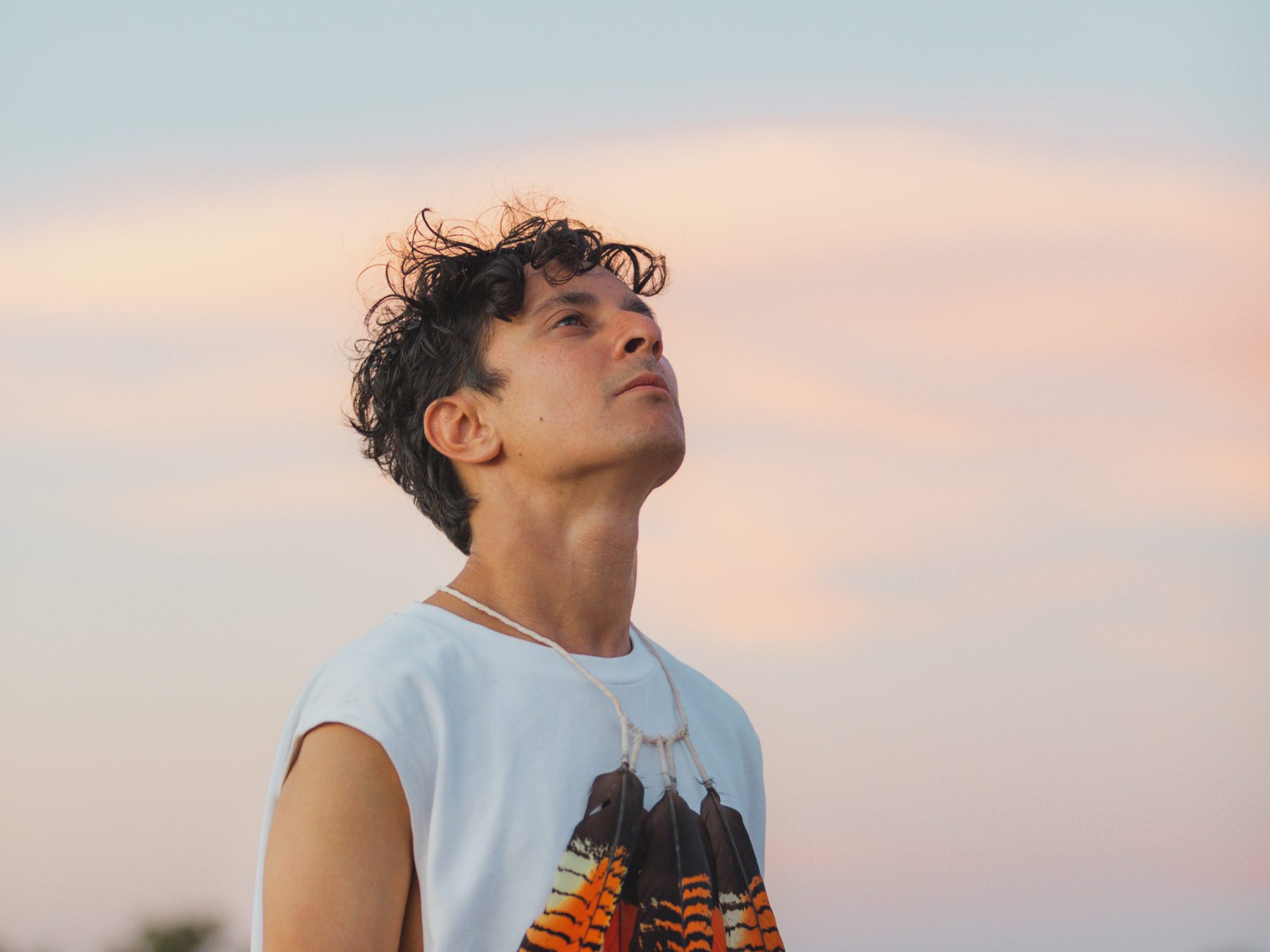
I was on a typical London tube commute the other day when I listened to a podcast interview with DOBBY.
He talked about the inspirations behind his new album, throwing in heaps of references to his adolescence and the early 2000s. It brought back a lot of memories, so I hit play on the record right after finishing the episode.
And all I can say after that first listen (and there’ve been many more since then) is this: DOBBY has proven once again that he’s one of the best storytellers and most innovative musicians in Australia today. So if you’re down for some nostalgic time-travel and an eclectic journey through soundscapes, this record is definitely for you.
PART 274 OF “AM I EVER GONNA SEE YOUR FACE AGAIN?” A RANDOM COLLECTION OF UNKNOWINGLY OBVIOUS FACTS ABOUT THE AUSTRALIAN MUSIC SCENE
To set the record straight, MARSHMALLOW is not the first time I’ve heard of DOBBY.
His epic collab with BARKAA, “I Can’t Breathe”, popped up on my radar back in 2020. That poignant track remains an anthem for Australia’s Bla(c)k Lives Matter movement to this day. It’s used in schools to educate students on First Nations justice, and it definitely put the First Nations rapper on a wider music industry map in Australia.
The next time DOBBY’s name appeared in my feed was a year later. When the pandemic shook up the usual ‘in person’ way of doing things, the annual Australian music conference BIGSOUND was replaced by a virtual First Nations-led music gathering BLAKSOUND (which, by the way, I’m hereby petitioning to bring back and make a recurring event). DOBBY was one of its curators, helping to put together an engaging programme, including real, non-BS conversations about pressing topics, like First Nations representation (or the lack of it) in the local industry.
I reached out to the rapper for an interview after that event. It turned out to be a compelling conversation about his background, craft and the “WARRANGU; River Story” project he would have been touring at that time if it hadn’t been for COVID. (Later, it was also released as an album, winning DOBBY an ARIA Award in the World Music category in 2024 and noms for other prestigious accolades).
I still recall the phrase that stuck with me the most from that conversation: “We [the First Nations artists] want to make it awkward without us.” His words have taken on a totally new meaning today, considering how many dope Indigenous acts have broken through or solidified their place in the Australian music business since. Including the author of the quote himself.
DOBBY (real name Rhyan Clapham) wears many hats.
He proudly identifies as Filipino and Aboriginal (of the New South Wales Murrawarri people), often blending multiculturalism into his craft. His music has been spun on countless radio stations in Australia, among them Sydney’s FBi Radio, Brisbane’s 4ZZZ, Melbourne’s PBS, First Nations’ Koorie Radio or the national broadcasters Double J and Triple J. The press, including The Guardian, Happy Mag and Purple Sneakers, has frequently reported on his projects over the years, too.
Known for his unmatched energy on stage, DOBBY has performed at major Australian festivals like Splendour in the Grass, Bluesfest, and PARRTJIMA. His craft has taken him worldwide, too: from Germany (Reeperbahn Festival) to the UK (The Great Escape), the US and the Netherlands.
As a drapper (rapper + drummer), film/TV/theatre/dance score composer, community organiser, arts curator, activist and producer, DOBBY continuously pushes artistic boundaries. But now, he’s gone back to “making music for himself.” The result of that shift in focus is his second LP, MARSHMALLOW.
Even if you’re familiar with DOBBY’s craft, this record still slaps. Firstly, because it’s not even an album in the traditional sense of the word – it’s a curated stream of consciousness and a well-structured collection of memories and thoughts that tell DOBBY’s story, both in the personal and professional realms.
On the podcast mentioned earlier, he confirmed that MARSHMALLOW is very much “a time-travel concept rap album born from my journey to reconnect with my inner child.” It’s partially based on his 2009 unreleased project, ‘The Royal Flame’, and inspired by the 1960s Stanford University ‘Marshmallow Experiment’. That combination makes it a deeply personal record that “weaves together themes of willpower, mental health, and artistic growth to tell a story spanning ten years of reflection, fear, and self-discovery.”
How that fable is told, however, is what makes this project unique. So buckle up when you listen to it – it’s a fusion of styles, influences and vibes that do take you by surprise.
For starters, DOBBY leverages other forms of expression to accompany the music. The opener, “The Experiment”, which explains Plato’s philosophical theory of the lower and higher selves in the context of basic human urges, already sets the tone for what’s to come. MARSHMALLOW is an educational resource, a piece of art and a muso’s confessional in equal parts.

With elements of a diary on “Talk 2 Me”, Kae Tempest-style spoken word/poetry on “Fight (Kim’s Song)”, and cinematic flashbacks to defining life moments on “2009”, this body of work escapes any classification. Cultural references (think Madonna, MySpace or CD players), quotes from kids who – to some extent – are DOBBY’s alter egos and other conversation snippets are seamlessly woven throughout, making the story flow naturally from one chapter to the next.
Consequently, MARSHMALLOW in its entirety could easily serve as a ready-made script for a retrospective coming-of-age series on a streaming platform (similar to 13 Reasons Why), a politically charged Broadway musical (like Hamilton) or an activist’s manifesto. As someone on Double J once said: “Australians could learn an awful lot from listening closely to what DOBBY has to say.” Not only Australians, to be honest.
And then, there’s the music itself. To say that it’s strictly a hip-hop/rap album would be unfair to DOBBY’s versatility as an artist. Many different genres make up this eclectic project, resulting in a nearly one-hour bold sonic escapade.
“Good for Nothing”, for instance, is a fairly classic hip-hop track in vocal delivery, but its arrangement could easily land it a spot on the next Beetlejuice movie soundtrack. The title track is slightly funky. “People” is a nod to jazz. “Sabotage!” has pop banger potential. “OLDER” is an R’n’B/soul-infused song. And DOBBY doesn’t shy from classical instrumentation mixed with a good old rock guitar, either, which you can appreciate on “Bright Lights.”
When I looked through the track list, apart from songs featuring Josh Pyke, Beckah Amani and Dyagula, another collab caught my attention. “Lessons feat. DOBBY” is not a mistake in labelling the song – it’s a rap battle. The DOBBY from 2025 converses with his younger self, breaking down the current state of things in the world and filtering his past dreams through that perspective.
This focus track is very cleverly executed. I can’t even fathom how many takes it must have taken to get it right, so I’m keen to see how he’ll arrange it for live performances, which – if you’re in Australia – you’ll be able to catch in November in Sydney/Gadigal and Melbourne/Naarm.
There’s something else that differentiates DOBBY’s approach to music-making.
Our backgrounds couldn’t be more different, and I will never claim to fully comprehend his lived reality growing up as a First Nations man. Yet his vivid storytelling on MARSHMALLOW managed to bridge that gap, triggering memories of my own teenage and young adult years in a way few recent albums have. This is a testament to how universal his music is.
Last but not least, leveraging the central narrative format on MARSHMALLOW is a creative move not all artists are ready to make.
Concept albums were a thing in the 1960s and 1970s. Then, the shift to loosely released singles and quick album turnover happened. So while modern audiences might not be used to diving deeper into an all-encompassing body of work, iconic acts who have something important to say have slowly been embracing this format again. Take Green Day’s 2004 American Idiot, Kendrick Lamar’s 2012 good kid, m.A.A.d city or Rosalía’s 2018 El mal querer (The Bad Loving).
I can’t think of an artist in Australia who could’ve done a concept rap album about self-discovery better than DOBBY.
Cover image by Prince Reyes Photography
MARSHMALLOW was released on July 31st, 2026 through ABC Music. It has 15 songs and is 57 mins and 15 secs long.

Melbourne artist WILSN pours her soul into the new record ‘Bloom’, proving we all need pretty songs about “love, loss, hope, and everything in between”. Album review
Some artists are loud and visible, so it’s impossible to miss anything they do. Some others mostly hide in the shadows, only stepping out into the limelight to promote new projects and releases. And then, there’s WILSN. The Melbourne-based artist won me over a while ago with her soulful music and unassuming music industry presence.…

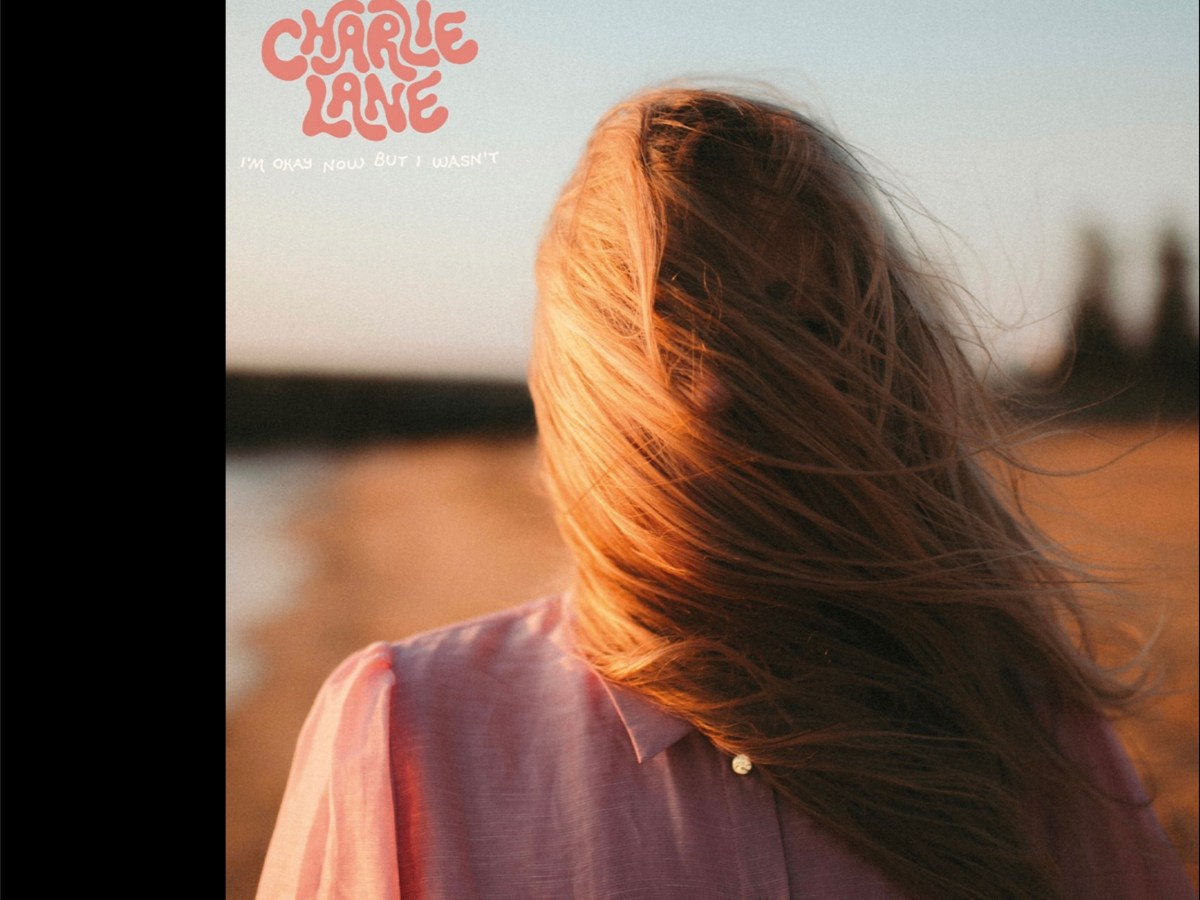
“I’m terrified about opening up about my story in any other way than singing it.” Disabled artist and activist Charlie Lane debuts an album that has helped her deal with personal hardships
Charlie Lane’s debut album is called I’m Okay Now But I Wasn’t. And I don’t know many bodies of work with titles that would tell you more about their content. So yes, this record is dark. After all, as a queer disabled female muso, Charlie has heaps of distressing life experiences to recount. But the…

“It’s like future-desert-blues-dub”. Julian Belbachir introduces Australia to his unique, contemporary North-African sound in the debut album ‘Babdoukkala’
This year, I’ve often been exploring sounds that go well beyond my ‘usual’ preferences. Even Spotify’s “Wrapped” has told me so. Having participated in WOMEX (the World Music Expo) in Portugal this past October has certainly contributed to broadening my horizons, too. Thankfully, there is a plethora of amazing acts in Australia, following their own…

