
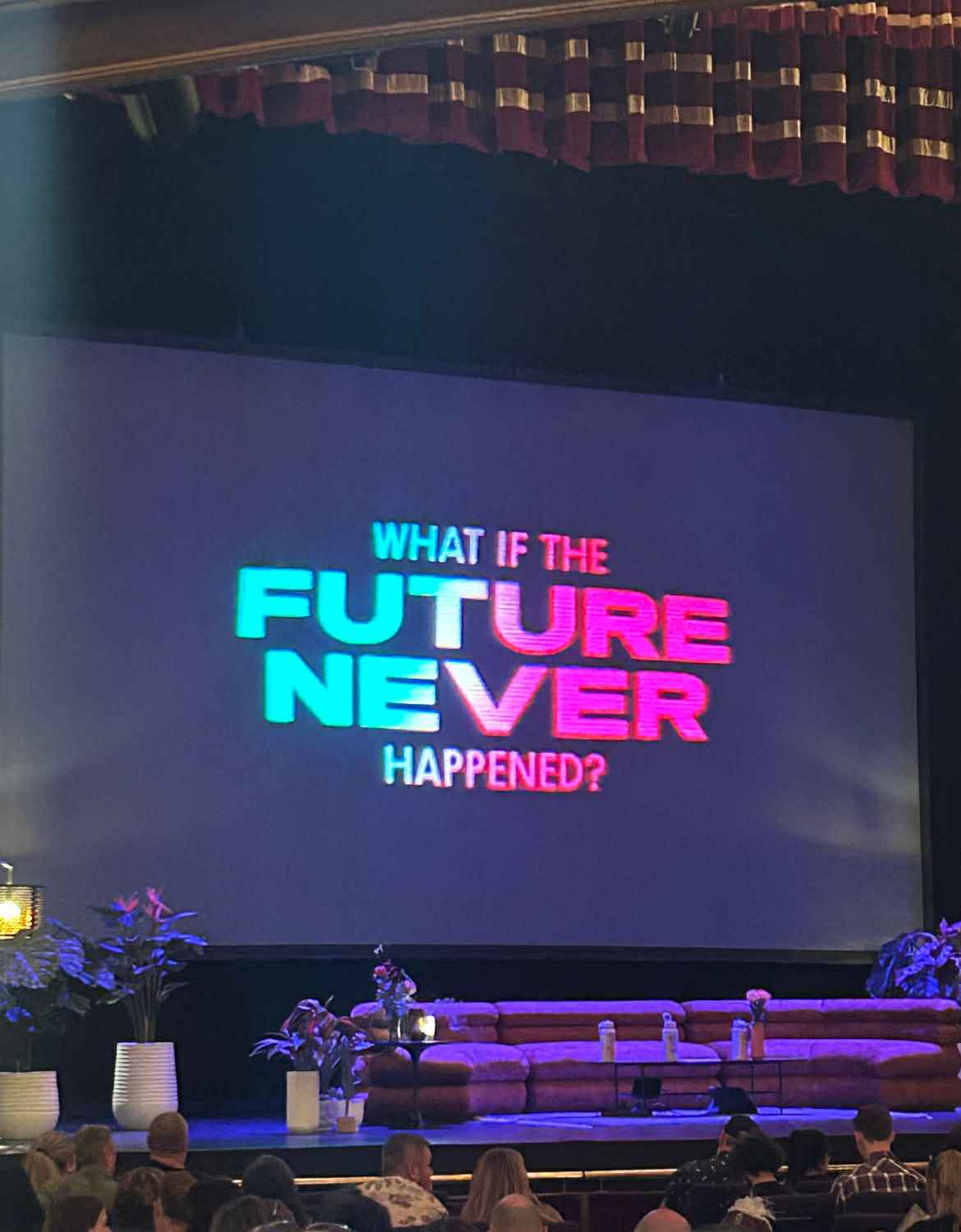
I was over the moon when I managed to secure a ticket to an event with one of my grunge music heroes, Daniel Johns. I deliberately targeted Newcastle. It’s the musician’s hometown, after all, so I knew the conversation would be special.
Then, life happened (again), and I had to postpone my trip to Oz (again). So you can imagine how absolutely devastated I was.
But I have my eyes and ears on the ground in the Land Down Under. And a friend of a friend, who, like me, grew up on Silverchair’s music, was more than happy to rep me at the event. She also wrote a beautiful review. So if you’re a Silverchair/Daniel Johns fan, I think you’ll shed a tear reading it, too.
PART 248 OF “AM I EVER GONNA SEE YOUR FACE AGAIN?” A RANDOM COLLECTION OF UNKNOWINGLY OBVIOUS FACTS ABOUT THE AUSTRALIAN MUSIC SCENE
This story begins in my brother’s old bedroom, circa 1995, when I was about eight years old.
CDs were these new shiny objects that people bought us for birthdays and Christmases – circular discs that held promise of the outside world, windows into worlds, across places we could only dream about, like New York City and London, and places we could rarely get to, like Sydney or Melbourne.
This room was situated deep into Newcastle, NSW, Australia’s suburban backdrop of the early ’90s surf beach culture, in a small coastal suburb that was the backdrop of everything I understood about the world at that time – Redhead.
Within my brother’s modest-sized bedroom, within our one-storey 3-bedroom brick home, was a new prized possession.
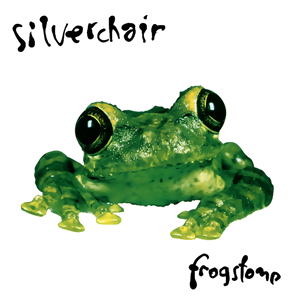
I remember the Green Frog staring back at me – I had been exposed to Nirvana and, potentially, The Doors by that stage. Music wasn’t new to me, but my favourite artist at the time was Jewel, a folk-pop songstress who sang from the heart.
I had no idea what I was in for when I took the CD out of my brother’s room and played it in my 1990s pink Casio CD player (a cherished belonging, which was later dragged down the street by some home invaders who thought they could hock it for $20 or more). The CD player doubled as a tape player – so you could record songs onto a mixtape. I had temporarily stolen my brother’s ‘Frogstomp’ album, so I could just add Silverchair’s hit single “Tomorrow” to my mixtape.
I was greeted by Daniel’s sweet-grunge contortions and opening riffs:
It’s twelve o’clock and it’s a wonderful day
I know you hate me, but I’ll ask anyway
Won’t you come with me to a place in a little town?
The only way to get there’s to go straight down
There’s no bathroom and there is no sink
The water out of the tap is very hard to drink
It was heavier than anything else on my tape, but Silverchair had its place in my 8-year-old psyche. “These guys are from Newcastle”, I was told over and over again. “How good is that!”
That CD, ‘Frogstomp’, was proudly played across family road trips up the coast and in mixtapes for summers to come. And “Tomorrow” still is one of my favourite songs of all time, making my top 10 best Australian songs of all time this year for Triple J. It encapsulated so much about us – the coastal grunge, the longue rooms turned stadiums for sports, or art, or music, the suburban dreams of other places to be.
Fast forward to the future.
Through a group chat, I’m given a ticket to see Daniel Johns in conversation and screening of ‘What If The Future Never Happened?’ – his debut into film production. All the feels come flooding back – I’ve seen the visuals for the film, and the aesthetics are really taking me places – not to New York, not to London, but back to Newcastle in the early ’90s, the backdrop of my childhood.
Daniel gets it. Daniel gets us, too.
As he makes abundantly clear during the 1-hour conversation, he is one of us. He’s had his struggles with fame at a young age, with health issues and addiction. But what if he is just another ’90s boy with long blonde hair in Merewether, who happens to play sweet riffs and put together lyrics that cut through you? But what if the dream never transpired? What if the future never happened?
These are the questions we were asked to consider as we looked at a playful, at times, serious, at other times, Daniel Johns for one hour in conversation with Dylan Lewis, who was tasked with keeping the show on track. Daniel, dressed in black with a black hat, giggles, cuddles his co-hosts and stares blankly into the crowd to tell us all how much he loves us, and that this is Newcastle, this is his family.
There are jokes about the Newcastle Knights (who bravely won the Grand Final in 1997 and the team who plucked a young Daniel Johns from his bedroom, one could only assume, after it to “sing us a song in celebration” – the photos of Daniel Johns and Knights star Andrew Johns celebrating that day are Newy folklore), and jokes about Fannie’s (a now-closed questionable late-night venue once owned by my neighbour, because this is Newy, you’re a degree removed from everything – sorry Dave, if you’re reading!) and references to Newcastle’s obsession with Henny Penny, a chicken shop the locals love to love.
Amongst the Newcastle nostalgia – Daniel plays three demo tapes from times gone by – raw, insightful – some that didn’t make the cut for ‘Frogstomp’ or later releases. They are like a window to Daniel’s soul – and I try to say that without irony or cliché. Daniel’s young voice is whispering inside his bedroom at times, trying not to wake up his sleeping household.
We’re told how Daniel writes songs – which is that he “sees the music” and needs to get it down. A process, which Dylan says, the rest of us don’t or can’t actually do.
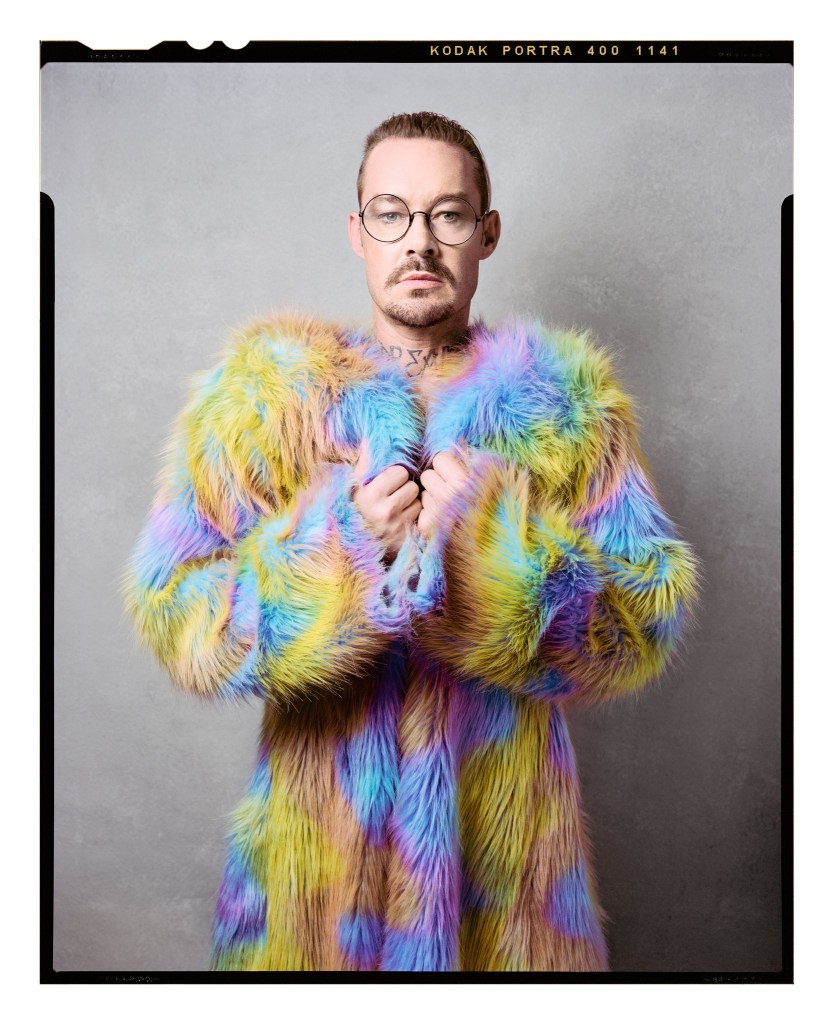
And then we’re reminded: while Daniel Johns is one of us, he’s also a rock god. He’s elite and supremely talented. There’s a sense that we helped build this, however. That the mean streets of Newcastle in the early 80s brewed this talent, and that Silverchair fought through the publicity machine to stardom, starting with one pub gig at a Newcastle venue at a time.
During the conversation, Daniel pulls an old mate up on stage, and there are some pictures of them as kids. He knew him as Daniel, not Dan, he said, and before Silverchair was even imagined, or maybe just a tadpole in Daniel’s young mind. This friend, belovedly, shared a story where Daniel, obviously also good at sports, would create a hubba-bubba mouth guard when playing footy from chewed bubble gum, and that bubble gum once lived behind Daniel’s ear at night to be used the next day. What can we say – boys are gross.
The conversation also included what Daniel called some “crowd work” – where a lucky few select people engaged with him, including a young boy who presented the artist with a piece of paper and said, “This is to protect you.” That boy got it. We all want to protect and preserve the genius that is Daniel Johns.
After the conversation – and reluctantly saying goodbye to Daniel – the film “What If The Future Never Happened?” was played.
As said by Daniel in the event program, “It is like a VHS copy of a copy of your childhood rioting in your mind. It’s both honesty and fantasy at the same time, and it’s up to the audience to determine where the lines are drawn.”
The film follows a young, long-blonde-haired protagonist with innocence in his eyes as he wanders through an average day in Newcastle suburbia in the 1990s. All the hallmarks are there – the Steel City in its glory, the waves of the coast, the vintage Henny Penny signs, the gang of bullies on their bikes.
While I won’t relay the movie punch by punch (and there are a few), I will say Young Daniel meets Future Now Daniel in an eerie grunge sci-fi dream that empowers the Young Daniel to go forward – just like Daniel Johns has empowered a generation of Newcastle’s youth to experiment with art and culture.
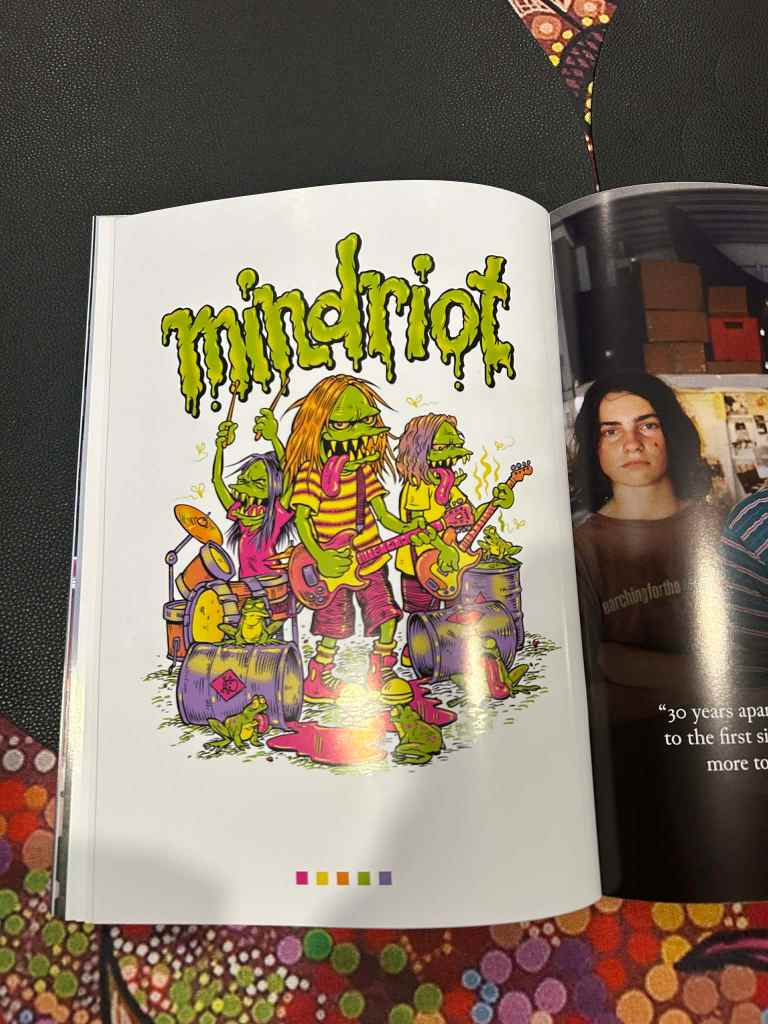
The film ends with a version of a ‘Frogstomp’ song played by Mindriot – an alternative name for Silverchair. It’s the perfect ending and homage to youth, time passed and the unknown future.
It’s common knowledge amongst Novocastrians that Daniel now lives amongst us – there are sightings all the time. But we also know he wants to be spared the intensity of the limelight, and this is his personal retreat. I like to think Newcastle gets the balance between awe and respect, and still provides Daniel with a home.
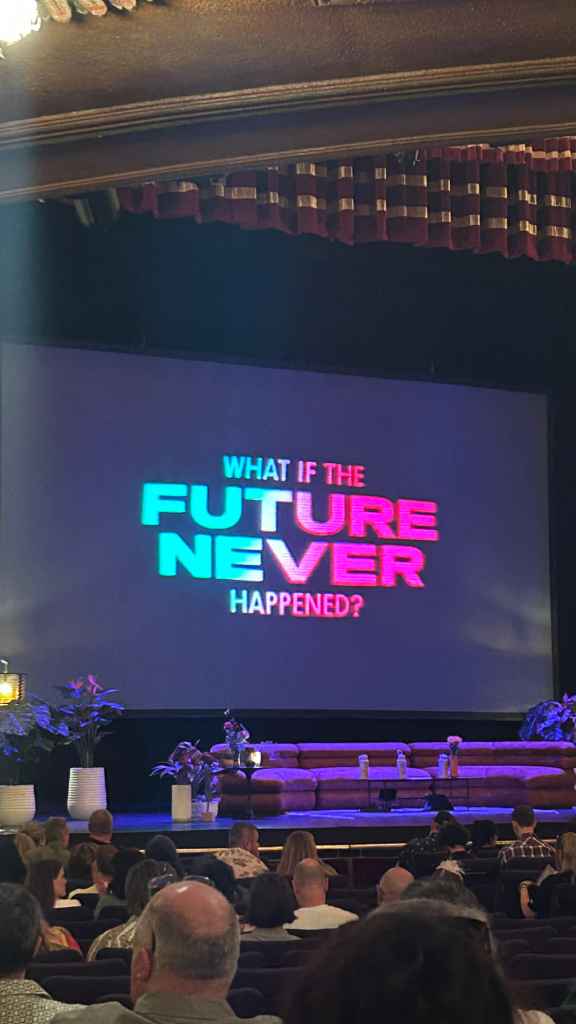
So this, I have to say, has been a privilege to write, as it was to attend. In a city that has more artists per capita than any other city in Australia, Newcastle is a creative hub. If anyone is a product of that cultural hub, it’s Daniel Johns. Daniel is a beacon of light amongst our peers, an example of how we can break out, break free and be who we truly want to be.
And can I just say, Daniel, I’m so glad the future happened.
About the author:
Brooke Forbes is a lawyer, new author and mental health advocate based in Newcastle, NSW, Australia. When not found at Redhead beach on the weekend, she’s found at coffee shops, reading and working on her next novel.
You can find Brooke on Instagram. Or check out her Author Facebook page.
More guest posts this way:
Guest post: Aussie muso BELLA DEER on her takeaways from BIGSOUND 2024
What do you do if you can’t be at an industry event in Australia but you really need to stay in the loop? You team up with someone to be your eyes and ears there. Easy! So this week, BELLA DEER reports on what went down at BIGSOUND 2024 from the perspective of an independent…


Guest post: “I’ve been laying low”. Confessions of an up-and-coming hip hop musician, ChillCheney
This post is for all emerging acts out there. This week, I have decided to lend this space to an up-and-coming muso. Because I could never tell the story of what it means to be an independent artist better than that artist himself. Especially that he wrote a song about it, in which he talks…

