

Rock the Vote encourages young people to register to vote, for example. One of U2’s most famous songs, “Sunday Bloody Sunday”, sheds light on disturbing events related to “The Troubles” in Northern Ireland in the 70s. And while Taylor Swift’s recent endorsement of Kamala Harris was not enough for the Democrats to win the presidential race in America, she brought them a new wave of supporters for years to come.
When music meets politics, good things tend to happen. But it’s not a one-way relationship. Musicians might have potent platforms to educate their fans on pressing societal issues. But it’s the politicians who hold the power to include or exclude certain sectors when it comes to budget-setting in their respective countries.
Sometimes, they need to be reminded of that. That is why Vote Music was launched in Australia.
PART 222 OF “AM I EVER GONNA SEE YOUR FACE AGAIN?” A RANDOM COLLECTION OF UNKNOWINGLY OBVIOUS FACTS ABOUT THE AUSTRALIAN MUSIC SCENE
I have a sticker on my laptop case that reads, ‘I love live music, and I vote.’ I got it in Australia during the 2019 federal elections.*
In my case, it’s not just buzzwords, though. I do love (live) music. I also studied politics. And even though I’m pretty disappointed with its state in the world right now, I always vote in elections I’m eligible for. I guess I just value the opportunity to express my opinion about things close to my heart and impact (to a certain extent) the course of action in matters that pertain to my life.
Now, this is a music blog. So, I’m not here to preach or lecture anybody on how important it is to exercise your civic duties. But I want to report on an interesting initiative launched in the Land Down Under just a few days ago.

To make a long story short, on May 3rd 2025, Australians will elect the new Parliament. In the Land Down Under, all eligible citizens must enrol and vote in federal elections. This means over 18 million people will hit the polling stations. If you’re a political party, it’s a lot of souls to convince in favour of your agenda.
And you know, topics normally leveraged in election campaigns revolve around health care, the economy, education, trade, jobs, foreign affairs, etc. A music policy is rarely a hot topic of conversation. But in Australia, it’s a slightly different story.
Politicians are well aware that arts and culture contribute to the country’s economic and tourism figures. The more switched-on ones know it’s impossible to ignore that artists are frequently role models young voters look up to for advice and guidance. And it’s no secret that Aussies love music and their artists.
The local music industry has noticed all that, too. So, in 2025, it has decided to use it to its advantage. Various leading music organisations have launched a joint campaign to rally political parties to ensure “more local music is heard at home and around the world.”
The initiative’s name perfectly sums up its main objective:

It brings together the individuals, organisations and businesses that make up the music industry across the nation. It is a non-partisan and non-commercial site centralising all the efforts to convince candidates, regardless of their affiliation, that investing in Australian music is an opportunity that cannot be missed. The time to act and “commit to a stronger future for Australian music” is now.
Vote Music has provided solid arguments about local music’s role in society and its economic impact. Here are the four most impactful facts and stats.
1) The Australian recorded music industry posted its sixth consecutive year of growth in 2024, with wholesale sales rising 6.1% to $717 million, according to ARIA (the Australian Recording Industry Association).
2) The sector employs well over 40,000 people in Australia, including the thousands of sole traders and micro-businesses involved in the industry.
3) There are between 2,000 and 3,000 live music venues in Australia, each providing significant employment opportunities for their local community and maintaining vital regional touring circuits.
4) The creative industry contributes more than ⅔ higher GDP than the coal mining, accommodation and finance industries. (Australia Institute – Browne, April 2020).
It’s also worth noting that a separate study by Victoria University has been quoted to highlight the health & wellbeing aspect of the Australian music industry.
On its informative website, Vote Music breaks down the reasons why political parties should pay more attention to a comprehensive music policy.
Firstly, “Australia’s music industry is a cultural and economic powerhouse.” Global superstars like Kylie Minogue, Troye Sivan or The Kid LAROI attract punters when touring overseas and locally. Home-grown festivals, including Bluesfest in Byron Bay, Tamworth Country Music Festival or the BIGSOUND showcase and conference, have made a name for themselves in the global industry. Moreover, Australian songwriters and composers have been winning important global music industry awards as well.
Additionally, music is “a driving force to Australia’s cultural identity, community wellbeing, and economic prosperity.“ I’d add that it has an educational aspect, too. Following its scene more closely has taught me heaps about the First Nations’ legacy, for instance. Plus, having formed a part of the local scene for a few years definitely convinced me that it is something all Australians cherish and are proud of.
This is also proven by the fact that Australian music organisations representing different interest groups within the industry have backed the initiative. Amongst them are the Association of Artist Managers (AAM), the Australian Festival Association (AFA), Australia’s export office – Sounds Australia, the National Aboriginal and Torres Strait Islander Music Office (NATSIMO) and Live Music Venues Alliance (LMVA).
The joint statement of all those music bodies identifies five priorities:
Vote Music also emphasises that “the industry is not thriving as it should” and that Australian music’s potential is not fully acknowledged or utilised. According to the organisation, “Today, Australians are hearing less and less of their own music. Outdated regulations and policies, declining local airtime across platforms, and a fragile live music ecosystem are putting our next generation of artists and the thousands of jobs that rely on them at risk.”
Giving it the recognition it deserves can contribute to many tangible benefits. Creating jobs, enriching towns and cities, boosting tourism, fostering creativity and innovation and strengthening social connection are just some of them.
But it’s not just the demands the project has highlighted. Vote Music acknowledges the Australian Government’s funding and the establishment of Music Australia. It also quotes the projected global music industry reach of US$163.7bn by 2030, arguing that “Australia has the opportunity to claim its share.”
Building on this momentum will “strengthen both supply and demand for Australian music,” is Vote Music’s conclusion. Having the right policy and investment can help “ensure that Australia is not just a country that loves music, but a country that leads in music.”
Vote Music has a clear vision of what this new, brave music world should look like. “We imagine a future where Australian music fills our airwaves, our pubs and venues, our festivals, our classrooms and our global stages. Where artists and industry can build sustainable careers, and music continues to grow jobs and connect communities across the country.”
To achieve that, more voices from outside and inside Australia are needed. Here are the three simple ways to get involved:
If you’re Australian, find your candidate and email your MP (Member of Parliament). And if you’re an Aussie music fan from overseas, like me, you can still take action by spreading the news about the campaign in your networks. Make sure you use the Vote Music media assets whilst you’re at it.
I don’t tend to pay so much attention to politics these days. But I’ll be sure to follow the results of the Australian federal elections this time around to see whether Australians have made music their number one vote.
*Just to clarify – I didn’t vote in the 2019 Australian federal elections. In fact, I’ve never voted in any elections in Oz because I’m not a citizen of the Land Down Under. I was given the sticker at a music event where it was randomly distributed to all participants.
Edit, May 19 2025: The Australian Labour Party (ALP) has won the 2025 Federal Elections. Its leader, Anthony Albanese, has been re-elected as Prime Minister. The summary of the party’s plan for the Australian arts industry can be found here.
All imagery: supplied by Vote Music
Learn about other significant music industry projects in Australia:
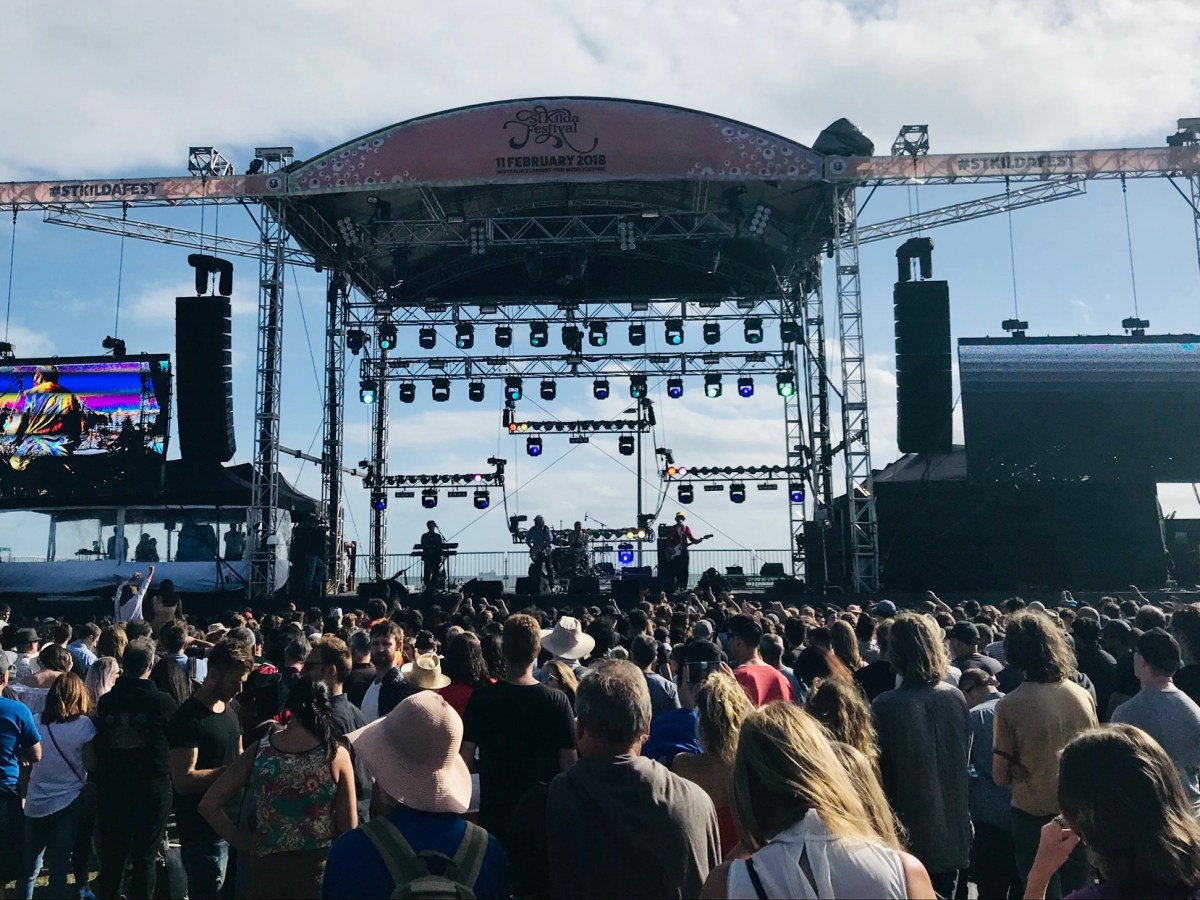
Advocacy for local artists. Why “Michael’s Rule” is a vital lifeline for Australian music
The music business, as such, has very few well-documented rules. And precisely because of its chaotic and wild nature, sometimes, its players need a gentle reminder that this game is ultimately about the artists who make music. It’s crucial in Australia, where local acts’ access to overseas audiences is somewhat limited. The infamous “tyranny of distance” is mostly to blame.…

Meet FEAT. – an Australian artist-led initiative paving the way for a new climate action strategy in live music. Video interview
Music is great. Intimate gigs in band rooms are awesome. And festivals are the best thing on earth. If you read this blog regularly, I’m sure you’ll agree with these statements. But like any other big venture, live entertainment requires heaps of resources, from electricity to power the site to catering for all staff and…

Is Ability Fest the most accessible music festival in Australia?
Short answer: yes. Not only that. It’s also the first of its kind Down Under. So there’s no need for me to write an entire post about it, right? But the reasons behind its conception are definitely worth shining a light on. Because you can’t talk about Ability Fest without mentioning the festival’s founder. PART…
 Silly McWiggles blog & podcast