
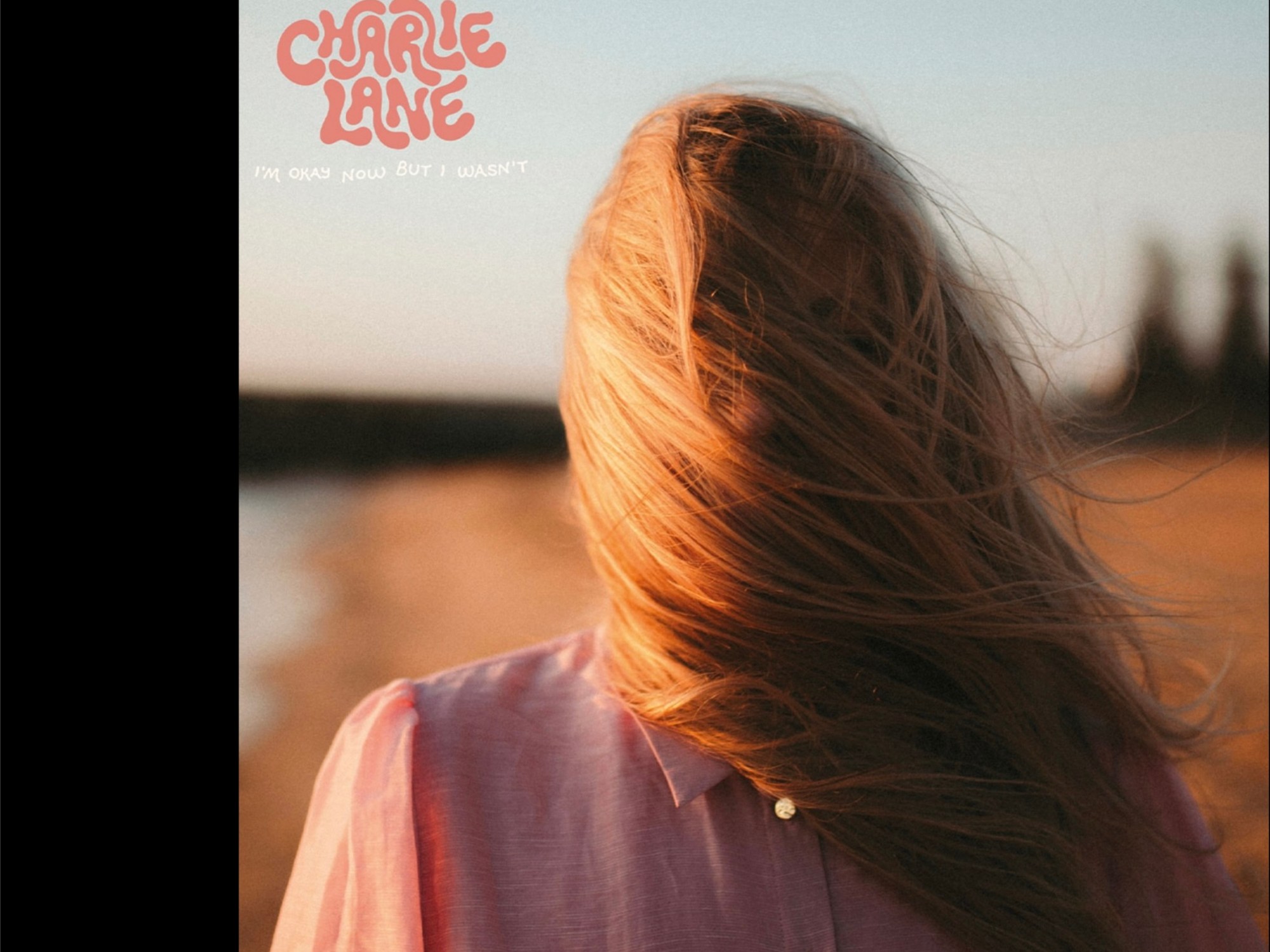
Charlie Lane’s debut album is called I’m Okay Now But I Wasn’t. And I don’t know many bodies of work with titles that would tell you more about their content.
So yes, this record is dark. After all, as a queer disabled female muso, Charlie has heaps of distressing life experiences to recount.
But the album was also a form of therapy for the artist. And in an honest Zoom conversation, she shared that journey of healing and advocacy with me.
PART 211 OF “AM I EVER GONNA SEE YOUR FACE AGAIN?” A RANDOM COLLECTION OF UNKNOWINGLY OBVIOUS FACTS ABOUT AUSTRALIAN MUSIC SCENE
I came across Charlie Lane’s name in another music publication, Australian Musician.
I was both intrigued and moved by the interview she gave to Greg Phillips. Her debut album resonated with me as well, and I instantly knew her story was worth sharing. So, I reached out to the Melbourne-based muso to propose a virtual chat.
Funnily, it turned out she knew who I was. She is an acquaintance of Eliza Hull – a disabled singer-songwriter and accessibility advocate I spoke to some time ago. Charlie read that extensive interview, so we had another thing to bond over.
But we opened the call on a different topic, spending the first few minutes talking about Charlie’s genre and influences.

Photo: James Adams
She classifies her style as a mix, sitting “somewhere under the indie subgenre” with hints of folk, rock, and even blues and pop interwoven into the main indie substance.
Hearing that, I can’t help but reference her answer to the question about her dream collaborators from the Australian Musician interview. Then, she said: “Probably Mark Ronson producing, co-writing the track with The National and then performing it with Kate Nash, and Amyl and the Sniffers.” We both laugh because that is a pretty wide spectrum of music genres.
“I just love The National and their dreamy vibes,” she explains. “But I’d love to talk to Amy [Taylor] from Amyl and the Sniffers, too, and rock out with her on stage. It’s her confidence, I think… I don’t know, I think she’s so cool.”
Another reason why she’d love to meet Amy Taylor is that the Melbourne pub rock queen doesn’t have a secondary instrument on stage, either. “And it’s comforting to know that you can do that and still be a front woman in a band,” Charlie adds. She doubles down on the piano herself, but her primary instrument is her voice, too.
“I grew up in a very split home, in a lot of music, where there were many different influences.”
The indie singer also reveals why she chose so many artists repping different genres as her dream collab. “I grew up in a very split home, in a lot of music, where there were many different influences,” she states. “I don’t come from a musical family, though.”
Her folks work in healthcare, which helped a lot with her disability. For instance, she learned heaps of medical expressions. “But it didn’t help in terms of the arts and the understanding of it.”
So I wonder which events led her to become a musician.
She recalls she’s always liked to write. As a kid, she was always jotting something down in her journals, about everyday things, her life, etc. Her parents constantly had to buy her new books. Back in those days, people would always picture her writing. So that was her first love. Music came second.
Another significant moment was when she was chatting to a career counsellor. Asked about what she wanted to do in the future, she wasn’t too sure. She was doing sports back then but wasn’t so much into it, to be honest. So one day, she thought: “What about songwriting?”
She started structuring things by listening to other people’s music. And at 16, she got her first keyboard and wrote her first song.
Hence, her creative process is always writing the lyrics first.
“I envy the people who can do it the other way around”, she confesses. “I’ve tried and it’s hard for me because I’m a pretty big storyteller. I think it’s because I was always good at English and English literature, and I like words so much,” she emphasises. “If a word doesn’t fit [in the phrase or melody], I’ll either round out a sound, join it with the next word, or just cut out bits and pieces. I’ll just make it work”.
“I find it much easier to put things in a poem or into a song than having to say it. It’s just another way of communicating, I guess.”
On that note, her lyrics are pretty raw and personal. So I want to know whether she’s not afraid of sharing so much about herself. After all, most things she sings about are her actual life experiences.
“To be honest, I’m terrified about opening up about my story in any other way than singing it”, she replies straight away. “I find it much easier to put things in a poem or into a song than having to say it. It’s just another way of communicating, I guess.”
But then, she adds earnestly, “It’s still scary, though. Sometimes, I forget I’m putting this out to the whole world. And then comes the realisation that ‘Oh crap, I’ve just put that up on streaming platforms’. And I have to sing it in front of audiences.”
I ask if we could go deeper into some of the traumatic experiences she talks (sings) about on the album. “In most of my interviews, and also my album, I’m pretty much an open book,” she replies. “I’ve lived a lot. I find it hard sometimes not to be [open about it]. You can ask me anything,” she assures me.
We start with the basics. Although she’d been releasing music under the Charlie Lane artist moniker for years, she came out with her disability only in 2024. And that is an essential factor in understanding her musical journey.
“I’ve got layers”, she explains. She suffers from CP (cerebral palsy), PTSD (Post-Traumatic Stress Disorder), depression, epilepsy and anxiety. COVID amplified it all as well. “And something very new to me – I’ve got POTS (Postural Orthostatic Tachycardia Syndrome), a chronic condition, too”.
On top of that, one of the songs on the album, “Tears”, narrates another disturbing life experience. Charlie was once in a domestic violence relationship, which meant that her mental health declined even more. She also stopped doing music for a while because of that. She was in pretty bad shape.
Consequently, recording the album was a form of therapy for her. According to Charlie, it’s a kind of autobiography. Take songs like “I Hate Me”, “I Need Sleep”, or “Fifty Shades of Bruised”.
She’s doing much better now because music helped her get it all out. That’s why – even though it’s not a concept album – she ended it with an optimistic track, “I Can’t Do Much”, to stress that things can improve.
We spend some time talking about her touring the record. She has heaps to say about gigging from a disabled musician’s perspective. There are things she’d highlight in terms of accessibility in live music venues.
For example, they need to start thinking about musicians in wheelchairs. They shouldn’t have to be lifted up on stage. It might not be her particular case, but she can imagine it can be pretty humiliating.
“It’s getting so much better, in Melbourne, and Australia in general. And hopefully, in the whole world as well”, she says, despite mentioning that first example. But there are, obviously, still some obstacles that Charlie has seen first-hand.
“I often trip over cords. I need a wireless mic because of that, and venues often don’t provide that.”
Her experience with CP is a significant factor when playing a show. “I often trip over cords. I need a wireless mic because of that, and venues often don’t provide that,” she states. “It’s obviously a bigger expense for them. But it might be an even bigger expense if I hurt myself.” To solve the situation, she’s thinking of investing in her own wireless mic for the moment.
She also brings up the point about sensory issues. Venues often don’t consider that and don’t offer a place to have some quiet time before going on stage. And you wouldn’t believe how many musos would benefit from that.
Another thing is related to her reduced mobility. She likes to have everything mapped out in her head: the stage setting, where the band would be, how and where she’s going to set up. In case she works with session musos, she also needs to inform them that she requires extra room. Every artist does it to a certain extent, but she needs to put some extra thinking into it. She feels safer and more comfortable that way.
Unfortunately, epilepsy stops her from driving a car. And it can get pretty costly to move around in taxis or Ubers just to scope out a venue before the show.


Because of all those examples she mentions, this year, she’s become more selective in choosing where she performs. It all depends on what venues can provide and how accessible they are. She also works with a great booker who helps her find suitable places. And thankfully, some venues in Melbourne have made themselves known as accessible, like Mamma Chen’s, where she had a gig coming up when we spoke.
Charlie also thinks many accessibility obstacles could be easily fixed. Creating an accessibility worksheet or rider, asking the simple question: “Do you have any needs we should know about?”, and sent out before the gig is one of the most feasible solutions venues could consider.
Apart from that, they should explain the accessible features and the room’s layout on their socials and website. For instance, map out where ramps and doors are. Indicating if there are any areas hard to access for people with mobility issues would be great as well. “It’s a little extra thing, but it’s so important”, she summarises.
Bakehouse Studios in North Melbourne is the best example of that. The legendary venue recently updated its facilities to be accessible – they got a lift for disabled artists. To celebrate it, the already mentioned Eliza Hull curated a line-up of local artists with disability, featuring Kerryn Field, Magnets and Charlie. The event happened on December 6th as part of the International Day of People with Disability.
Speaking of Eliza Hull, Charlie looks up to her when it comes to activism. That’s because she didn’t have a lot of examples when she was growing up. The lack of representation in society is just too real. And the image of a successful music star is completely different, at least regarding their appearance.
So she reckons it’s great to see more advocates and more people coming out with their disabilities. Good things are happening on that front, but “we need to keep pushing”, according to Charlie.
On the other hand, she can completely understand people who don’t want to share that part of their lives “because it’s just so anxiety-inducing.” Until this year, she was hiding her condition as well. She thinks people disconnect from physical disability and mental health, unfortunately.
She gives me a practical example. “I felt ashamed getting up on stage and scared that people would find out. You always think about whether people notice or not. You’re just so self-conscious all the time. And nobody should feel that way.”
“Don’t get me wrong – advocacy is tiring. It’s like a burden of truth. But it’s worth doing. Someone’s just gotta do it. And I’ve been doing that all my life anyway.”
As a result, for a long time, she didn’t think she’d gain industry recognition or succeed in the music business being an artist with a disability. And it probably wouldn’t have been possible in her case five or six years ago.
But it is now.
“So I want to help other people do that,” she proclaims proudly. “Don’t get me wrong – advocacy is tiring. It’s like a burden of truth. But it’s worth doing. Someone’s just gotta do it. And I’ve been doing that all my life anyway.”
She also hopes her album will contribute to that quest. “It’s lovely that audiences are connecting with it, and it’s helping them out somehow as well”, Charlie can’t help but smile when she says these words.
After all, there’s nothing better than other people benefiting from the musical therapy you have personally crafted. Right?
Charlie is also proud of being included on the bill of Roar Fest, a new festival celebrating Victorian female artists. It’s programmed for International Women’s Day in 2025 and hosted by Ella Hooper (from the Killing Heidi band). Some other amazing women performing at the event are Kate Ceberano and WILSN.
Find out more about accessibility, diversity and inclusion from my chat with disability consultant Morwenna Collett.
Read more interviews with female-identifying Aussie musos:
In her new single, Nardean decides to “Follow Thru”. The R&B/hip-hop artist on her strict upbringing, creative roadblocks and moving to London. Interview
Nardean has a vivid memory from when she was 13, maybe 14. “I was singing in a shower and imagining things. Very specifically, I can remember I was imagining I was on stage in a stadium. And there were 80 thousand people watching me”, she recalls. But back then, she brushed off that vision. It…


Singer-songwriter and disability advocate Eliza Hull proudly portrays herself in the “Running Underwater” music video. Artist interview
A music producer once told Eliza Hull that she shouldn’t walk in her music videos. Because if she did, nobody would listen to her songs. So she hid her disability from the industry and her fans for a very long time. But enough is enough. And in the clip to her new song, she’s pushing…

“We are so lucky to be a part of this country”. Sydney-based Tomboy pop/electronic artist HANDSOME on the queer community’s place in Australia. Interview
A few weeks ago, I was browsing through the New Music Friday AU/NZ playlist on Spotify when I came across a song called “Back To My Vice”. It drew me in right away, so I looked up the artist as well. It turns out HANDSOME has been making music with a message for quite some…
 Silly McWiggles blog & podcast