
Being an (independent) artist means wearing more than one hat these days. Sure, your main “job” is writing, recording and performing songs. But someone needs to book studio time. Those press releases won’t send themselves. Chasing overdue gig payments is another task altogether.
Working in music is not a walk in the park, even for experienced players. And very few emerging artists have the time, resources or energy to invest in a management course to help them steer their careers in the right direction. Consequently, many feel lost in the business side of things and struggle to be self-sustained.
Thankfully, an artist-led organisation in Australia helps managers and self-managed musicians navigate the industry’s deep waters. And it’s just opened applications for its 2025 cohort.
PART 200 OF “AM I EVER GONNA SEE YOUR FACE AGAIN?” A RANDOM COLLECTION OF UNKNOWINGLY OBVIOUS FACTS ABOUT AUSTRALIAN MUSIC SCENE
I used to manage an indie folk band. Actually, I was quite surprised when they accepted me for the gig. Back then, I didn’t have much experience in the business or a broad network of industry contacts. But I’ve always been resourceful and persuasive. So, I guess I sold myself very well.
Let me be completely honest, though. In the beginning, I had no clue whatsoever what I was doing. Writing a proper press release, cold calling/emailing music journos, negotiating fees for gigs, reviewing legal contracts, liaising with promoters, booking travel and accommodation… you get the idea. It was A LOT.
Because I was learning on the job, it wasn’t always pretty, either. When I talked to the industry veterans, I often felt a) small and stupid, b) not taken seriously, c) not welcome and/or d) ignored. I’m not ashamed to say that, many times, I didn’t even know what people were asking me about (i.e. technical things from the band’s rider). But I swallowed my pride and pushed through. And what a life lesson it was!
Then, I landed a spot in a music industry incubator that helped me structure all that chaotic knowledge I’d accumulated over the 18 months of managing the band. I don’t mean to exaggerate, but it really was one of the best things that happened to me.
You know why? Because I was amongst peers who had similar experiences. We talked it all out in a safe and supportive environment, shared our findings and best practices and… just had a good laugh at taking those first steps in the biz. I still follow and cheer for many industry colleagues I met there.
The project I took part in was a European initiative. But I can see that The Seed Fund represents the same values, “fostering collaboration, mentorship, and creative growth.” So I’d wholeheartedly encourage every up-and-coming muso and newbie (or oldie) manager in Australia to avail of its programs.
The Seed Fund was set up in 2005 by two artists whose names are widely recognised in the industry Down Under. John Butler is best known as the frontman of the Perth-based roots trio. And Danielle Caruana goes by the moniker Mama Kin professionally.
Their involvement already speaks volumes about the program, in my humble view. Both are activists and philanthropists who often use their voices to mobilise the music community in Australia and their fans worldwide.
As musos, they know all too well what challenges lie ahead in the business, especially at the start. It can get overwhelming and lonely out there sometimes. Hence, The Seed Fund’s objective is artists’ empowerment because they are a vital link in the music landscape.
They do it through various initiatives and funding opportunities, with activities spanning visual arts, professional development, touring, recording, marketing and publicity or social activism. They count MusicNT (the peak body for music in the Northern Territory) and APRA AMCOS (Australian copyright management organisations) among their industry partners.
The Seed Fund’s flagship program is the ‘The Future Makers Management Workshop’, with a simple formula.
The whole idea is based on building a community. The organisation’s Managing Director, Stacia Goninon, shared that “In a time where artist managers and self-managed artists are predominantly working in silos, facing a barrage of long-standing and new challenges, opportunities to intentionally come together and form personal and professional connections is incredibly valuable.” I couldn’t agree more.
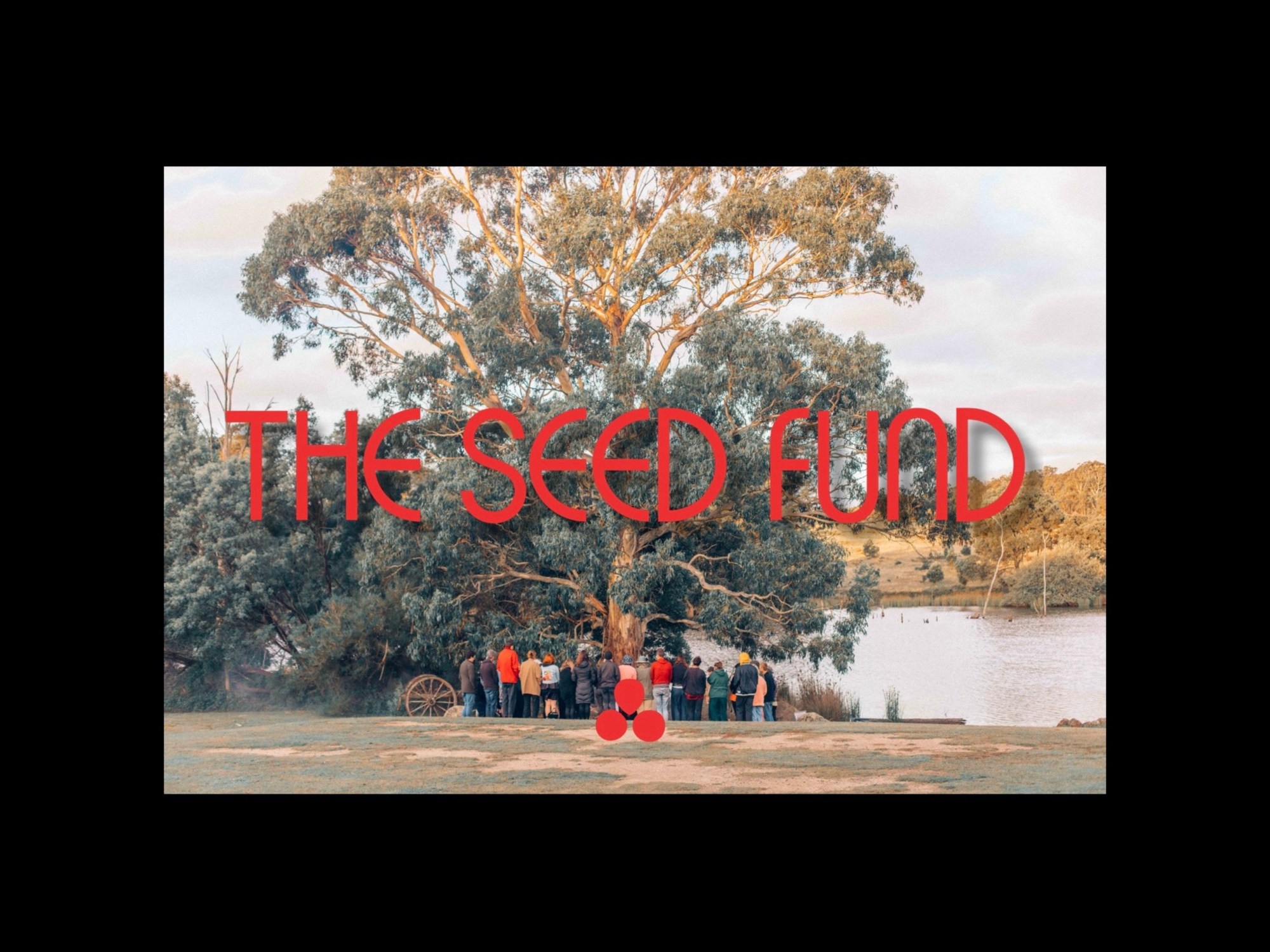
So how does it all work? 25 emerging managers or self-managing artists gather in beautiful surroundings. (For example, in 2019, the cohort met at the stunning location – Cammeray Waters in Macedon Ranges – just over an hour North-West from Melbourne.) During the three days of workshops (or think tanks, as the organisation dubbs it on its page), they are paired with industry experts who manage internationally known Australian bands.
I couldn’t believe my eyes when I saw the list of the names that have come through the program. So many of them are artists on my radar, like Kylie Lionhart, Jen Cloher, Dallas Frasca, Ngaiire, Lanks or Jess Ribeiro. Alex Lahey – an alt-rock muso I’ve been following since she dropped her debut album in 2017 – summarised the initiative in one sentence; “The Seed [Management Workshop] started my career.”
I’ve also spotted the names of the managers I look up to in the business today, including Andrew Stone from Chugg Music. His story has recently been shared on The Seed Fund’s socials.
What I find additionally credible about the initiative is the “Outcomes” tab on their website. This is where they mention tangible results in the participants’ professional lives. Let me quote one from the 2020 edition for you:
“RHIANNON ATKINSON-HOWATT aka Merpire has quickly grown from nascent head-turner to powerful frontrunner of the local alt/indie-po p scene. Backed by an impressive predominantly female live line-up, such a powerful and versatile live presence has already seen Merpire perform standout sets at Bigsound, A Festival Called PANAMA, Brunswick Music Festival, and supported Australian acts like Angie McMahon, Didirri, Oh Pep!, Last Dinosaurs and more. With a debut album set for 2020, Merpire’s exciting upward trajectory continues to prove why she’s topped many a one-to-watch list of 2019. Self Managed, VIC.”
Do you want to hear some stats as well? So far, The Seed Fund has raised and distributed a mind-blowing AUD 1.5 million to champion artists in the country. 12 workshops have been delivered over 15 years. And nearly 300 managers and self-managed artists have availed of the program so far.
Due to the pandemic, the Management Workshop took a longer break. The good news is that it’s back for 2025. Applications are open till Tuesday, November 12th.
Now, I don’t do this often, especially when I haven’t participated in a program myself. But knowing the founders’ reputation in the Australian music business and the value their workshop brings to the artist community, I totally endorse and recommend it.
So if you’re an emerging muso or artist manager in the Land Down Under, do yourself a favour and apply today. (You can thank me later.)
More about Australian music industry’s initiatives:
Advocacy for local artists. Why “Michael’s Rule” is a vital lifeline for Australian music
The music business, as such, has very few well-documented rules. And precisely because of its chaotic and wild nature, sometimes, its players need a gentle reminder that this game is ultimately about the artists who make music. It’s crucial in Australia, where local acts’ access to overseas audiences is somewhat limited. The infamous “tyranny of distance” is mostly to blame.…

6 easy ways to support Musicians Making A Difference (MMAD) – an Australian charity transforming young lives through music
We all remember our childhoods and teenage years differently. Mine were fairly uneventful, all things considered. I grew up in a safe home with supportive parents. I was never hungry. I went to school and later on, with my family’s help, to uni. We often went on holidays, domestically and overseas. I was surrounded by…
Meet FEAT. – an Australian artist-led initiative paving the way for a new climate action strategy in live music. Video interview
Music is great. Intimate gigs in band rooms are awesome. And festivals are the best thing on earth. If you read this blog regularly, I’m sure you’ll agree with these statements. But like any other big venture, live entertainment requires heaps of resources, from electricity to power the site to catering for all staff and…
 Silly McWiggles blog & podcast