
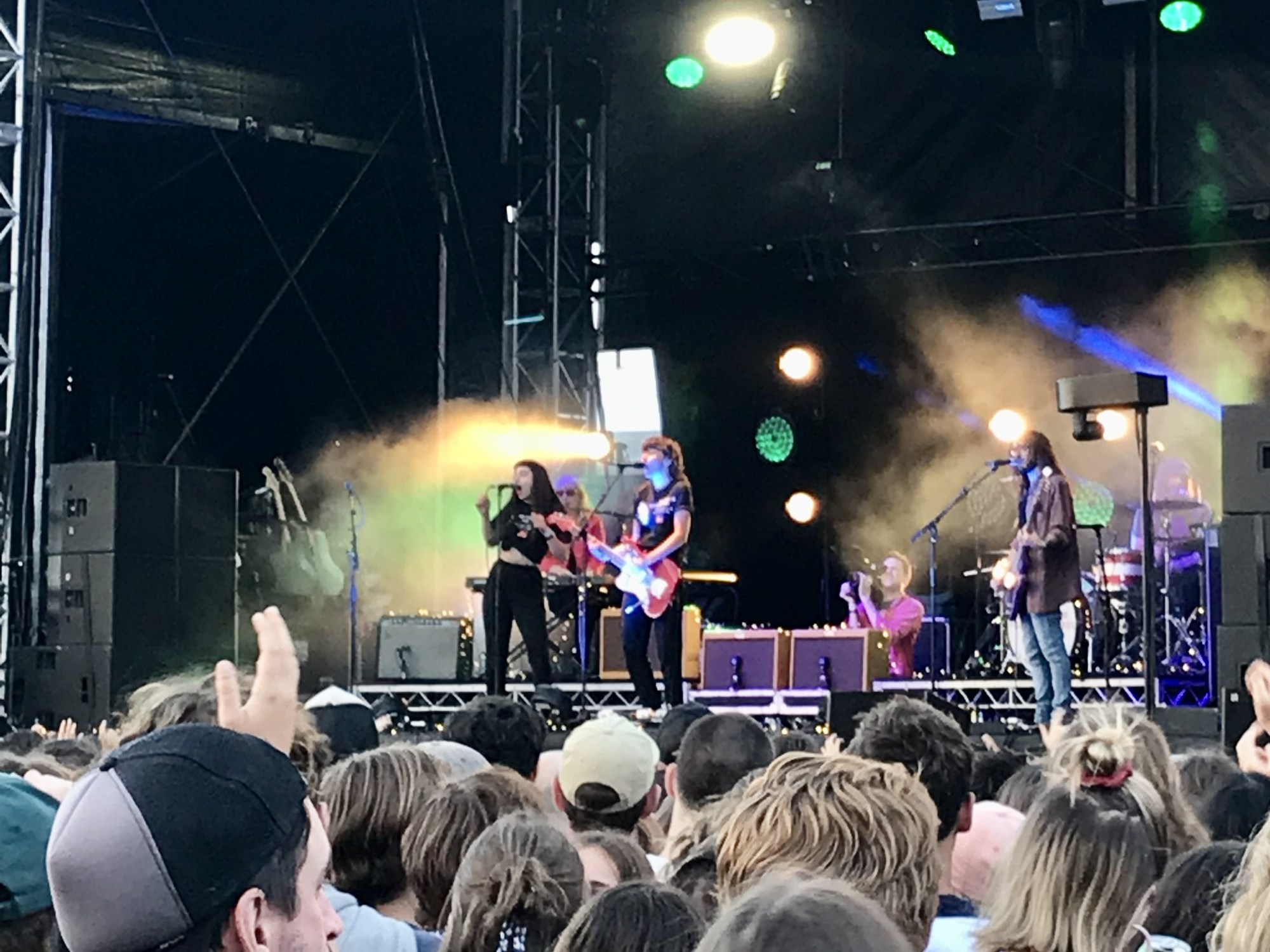
Glastonbury in the UK, Coachella in the States, Rock in Rio in Brazil or Roskilde in Denmark. Have you ever been to any of them?
Most famous music events take place in Europe or the Americas. But Australia also has a few iconic ones.
Amongst them is Splendour in the Grass (frequently shortened to SITG). And its 2024 edition was canceled just last week.
PART 180 OF “AM I EVER GONNA SEE YOUR FACE AGAIN?” A RANDOM COLLECTION OF UNKNOWINGLY OBVIOUS FACTS ABOUT AUSTRALIAN MUSIC SCENE
Splendour in the Grass broke the Aussie internet again. This time, however, for all the wrong reasons.
The comments on the cancellation were rather grim. They ranged from “If Splendour In The Grass can fail, any festival can” (The Daily Telegraph) to “A very sad day” (Luke Girgis, formerly The Brag Media Group, on Threads) and “I was so looking forward to being there and all of us having the best time, Oz” (Kylie Minogue, one of the scheduled headliners, on X/Twitter).
For the Australian music business, SITG is not just another festival, however. It’s an institution with a (nearly) impeccable reputation. (Except for the “mudbath mishap” from 2022. And even then, it only canned performances for one day).
Organised for over two decades in July in the beloved Byron Bay area, the event pulls in big crowds year by year. Every music fan in Australia wants to experience it at least once. And every Aussie act wants to play it at least once.
To understand why the cancellation has made headlines Down Under, here is the SITG 2024 timeline:
January 22nd – the dates for the 2024 edition are announced on socials.
End of January – beginning of March – throwbacks to previous editions.
The first week of March – info on the event’s logistics, accommodation and transport land on the festival’s channels.
March 12th – the massive line-up drops, including the hottest Aussie acts right now, like Royel Otis, Confidence Man or G Flip, and international stars, i.e. Arcade Fire, Girl in Red or Turnstile.
March 18th – 20th – tix presales kick off (for returning customers, Optus clients and TikTok users),
March 21st – general sale online begins.
March 26th – the festival announces this year’s cancellation.
If my memory serves me well, SITG used to sell out in a matter of minutes. So, to see it scrapped in 2024, two weeks after the line-up announcement and less than a week since opening ticket sales, is actually shocking.
Sadly, this is not an isolated case.
Earlier this year, a regional festival, Groovin The Moo, was “forced to cancel” its tour. And in Western Australia, a smaller event called The Fairbridge Festival was called off for the fourth time after the pandemic.
All organisers have cited similar reasons for cancalletions: poor (slow, low – you name it) ticket sales, rising production costs and insufficient volunteers to help run the shows.
But this is a much more complex problem, in my opinion. It’s a combination of interconnected factors that are hard to foresee and whose risk level can’t be easily mitigated.
I love live music. Gigs and festivals make the top of my highlights list every single year. But even I weigh my options much more carefully these days. And I’m 100% certain I’m not alone in my revised, post-pandemic decision-making process.
Forking out hundreds of [insert your currency here] is a serious financial investment for most punters. The cost of living crisis is real. The price of the festival ticket is just a part of it. Add transport, accommodation and food, and you could easily go on a fancy holiday to South-East Asia instead.
(This is very true for Byron Bay, for instance. It’s a fairly small community for a SITG-size festival. So the prices automatically go up there in July.)
What I’m about to write next might sound obvious. But if you can’t pay your rent or fill up your car with gas, entertainment is the last thing on your mind. Even the music superfans who “live in the here and now” and “worry about the consequences later” start paying more attention to how they spend their hard-earned money. The 20-dollar smashed avo brekky or 5-dollar oat flatwhite are no longer the guilty ones here.
Actually, festival organisers figured that out some time ago. More and more events offer flexible purchase options nowadays, including split payments and no-fee instalments. Because if you can get a 6-figure mortgage for a house or car, why not do the same for entertainment, right?
On the other hand, tickets to single-artist concerts, like Taylor Swift (who has just joined the prestigious Forbes Billionaires list), Beyoncé, Harry Styles or Pink fly off the virtual shelves as quickly as ever. And we all know what the price tag on those gigs is. So, the economic factor is not the decisive thing here.
Since we’re on that topic, though, let me throw an unpopular opinion into the mix.
Australian promoters claim it’s difficult to attract enough punters to their events if they don’t secure an epic, international headliner. So the vicious circle starts.
Some iconic artists’ rates are extortionate, in my opinion. But can they be honestly blamed for it? I’m not so sure. After all, it’s their fans who want out-of-this-world entertainment. That expectation inflates production costs, which need to be covered by decent ticket sales. Which – as it turns out – the same fans are not prepared to purchase.
There’s an additional reason that contributes to this economic puzzle. The Australian dollar has not been doing well compared to the American currency recently. The high-interest rates are undoubtedly a real vibe killer for promoters. And the lack of serious arts funding from the Australian government is the nail in the coffin.
Hence, a simple question arises. Why aren’t audiences willing to support more local artists who don’t have to bring their entire entourage and production from overseas? Tones And I, who was meant to perform on the second day of SITG this year, expressed that exact view after the cancellation.
In an IG story, she said, “I understand that everyone gets so excited when overseas artists come over, (…) but soon we’re really not gonna have any festivals left, which is not only gonna deter overseas acts from coming over, but it’s really gonna hinder the up and coming Australian live music scene.” She also called on music fans to back up local acts and festivals now more than ever.
Her fellow artist, Alex Lahey, has also just published an easy-to-follow 6-step guide to supporting live music. It looks like Aussie musos get it. And that’s a good sign.
There is also another plausible explanation for the current state of things in the live entertainment industry in Australia.
Maybe running festivals in this particular format is an antiquated, obsolete or irrelevant thing. Maybe the audiences would prefer more intimate experiences, focusing on community rather than overwhelming their sensory experiences.. Maybe the festival venues are more concerned about sustainability than making a profit at the cost of a massive carbon footprint. Or maybe we need a completely new idea for a well-balanced music gathering altogether?
I covered a similar topic in the European context on my ‘Silly Talks Music’ podcast. Check out the two episodes with Dino Lupelli from Music Innovation Hub below.
Last but not least, this is not a one-sided conversation.
To fully grasp why the Australian festival scene finds itself in a bit of a pickle right now, all parties involved need to work together to find the “cure”. That includes promoters and event organisers, artists and their teams, the government, the venues, local communities and music fans.
So if you, dear reader, have a revolutionary idea on how to achieve that, you know where to find me.
Read up more on Australian festivals:

The new TRANSGENRE Festival sheds light on the trans- and non-binary artists’ community in Australia
2023 has been a year of festivals in Australia. That’s a fact. In July, Splendour In The Grass (SITG) made up for the disastrous event from last year. At the beginning of October, Aboriginal rapper Briggs put on a one-day music celebration in favour of the “yes” vote in the “Voice to Parliament” referendum. And…


‘That Festival Site’ is a comprehensive Australian live events’ database you never knew you needed
Music festivals are one of the best things in the world. If you read this blog regularly, you probably agree with this statement 100%. But nobody has bottomless pockets or unlimited free time to attend every single live music event there is in Australia. And if you’re after some stats on legendary events from the…
Love wine and live music? Then these 2022 Aussie festivals amongst vineyards are for you
Enotourism is one of my favourite hobbies. Visiting vineyards, tasting the wine (often straight from the barrel) and witnessing the whole process from harvest to bottling are things I could honestly do every single day. But there’s one ingredient that can make this experience even more wholesome and complete – live music. Thankfully, concert promoters…
 Silly McWiggles blog & podcast